
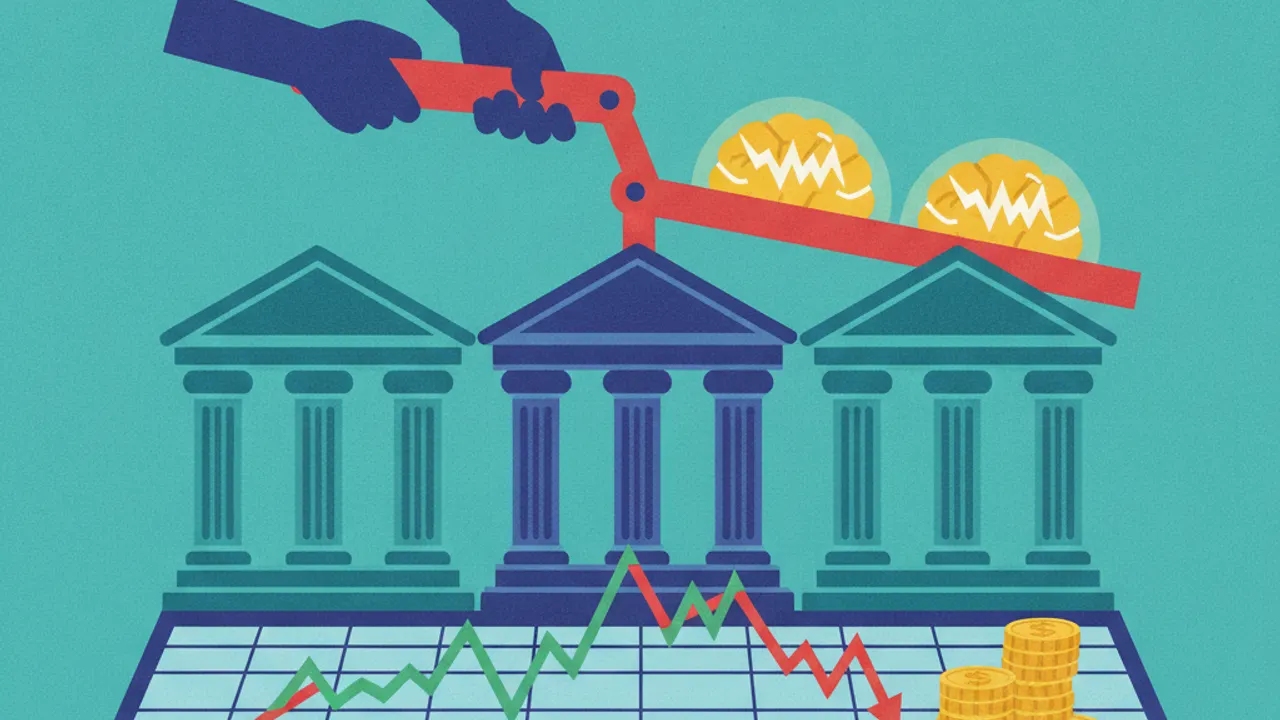
Following months of widespread pilot programs and experimentation, Wall Street is taking a more cautious stance toward generative and agentic systems. Goldman Sachs has revoked direct access to advanced coding and agentic tools, including Claude Code and GitHub, for employees outside its software engineering divisions. This restriction specifically targets investment bankers and traders who previously experimented with automated code generation and scripting. The move formally brings an end to an era of unmonitored exploration across the bank's front-office operations.
A Goldman Sachs spokesperson confirmed the decision to Bloomberg, explaining that the firm evaluated several months of trials before narrowing access. The investment bank is now concentrating deployment within specialized units capable of properly managing long-term benefits alongside operational hazards. Management specifically cited concerns regarding mounting computational costs, cybersecurity vulnerabilities, and the protection of proprietary data integrity. Unsupervised tool usage among dealmakers and traders posed governance challenges that executives deemed unacceptable for enterprise operations.
Goldman Sachs is far from alone in recalibrating its technical boundaries. At JPMorgan Chase, Chief Information Officer Lori Beer recently cautioned that the pace of artificial intelligence development continues to outstrip the creation of institutional control frameworks. Beer emphasized that banks must deliberately slow down deployment timelines to prevent technology from outrunning risk management. As regulatory scrutiny mounts, global financial firms are abandoning bottom-up software adoption in favor of centralized, tightly policed architectures.
The Wall Street retrenchment mirrors broader enterprise friction detailed in Capgemini's World Cloud Report 2027, published on November 5, 2026. Surveying 1,100 C-suite executives across the financial sector, the report reveals a persistent gap between ambition and operational readiness. While 59 percent of banks and insurers currently pilot or deploy multi-agent systems, only 10 percent possess the enterprise-wide orchestration required to run them autonomously. Without comprehensive infrastructure, autonomous workflows frequently stall or create operational blind spots.
Economic viability presents another major hurdle for banking executives. Capgemini discovered that 50 percent of surveyed institutions cannot demonstrate a consistent return on investment from their autonomous agent deployments. This lack of financial clarity is driving a sharp reallocation of corporate capital. Looking toward 2028, financial institutions project a 141 percent surge in budgets strictly tied to verified bottom-line results, while funding for generic efficiency projects is expected to plunge by 42 percent.
For finance professionals, the policy shift at Goldman Sachs signals the conclusion of unguided workplace artificial intelligence. Individual prompt experimentation is rapidly being replaced by centrally mandated, heavily audited internal platforms. While intelligent agents will remain a cornerstone of banking modernization, their capabilities will now be tightly constrained by cybersecurity protocols, strict permissions, and unambiguous business justification.