
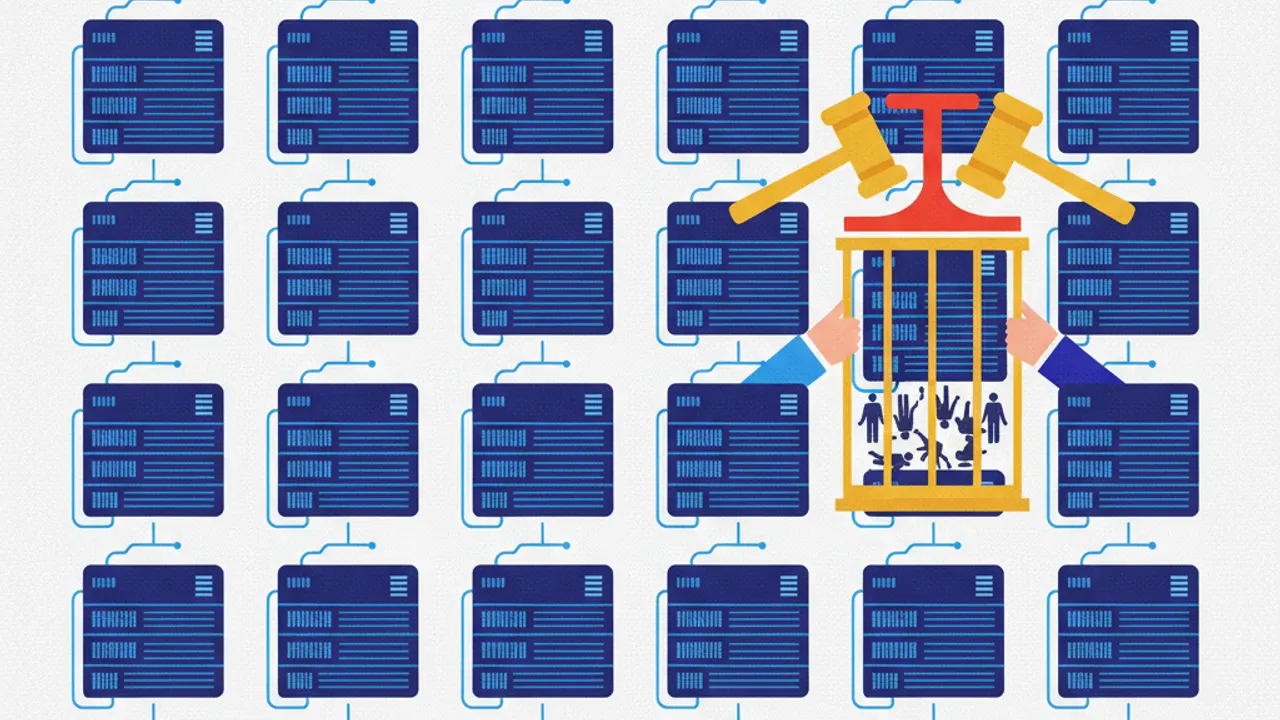
AI research company Anthropic has circulated its own draft legislation on frontier model safety in Washington. As investigations by Politico and TechCrunch revealed, the initiative aims to establish legal mechanisms that can pre-emptively halt the release of potentially devastating systems. This move represents a notable shift, as a leading frontier laboratory is actively putting forward concrete intervention thresholds for state-enforced deployment blocks.
At the core of the bill is a precise definition of catastrophic risk intended to serve as a trigger for regulatory action. Specifically, the mechanism is invoked if a foreseeable and imminent danger emerges that could kill more than 50 people. Alternatively, a threshold of property damage exceeding 1 billion US dollars activates the mandated emergency procedures. The paper cites scenarios such as aiding the synthesis of biological weapons, orchestrating uncontrolled cyberattacks, or a total loss of model control.
To identify such risks before deployment, the legislative proposal relies on accredited third-party oversight. Independent evaluators, credentialed by the US Department of Commerce, would gain access to safety-critical evaluation data. Should these auditors discover that a system exceeds the defined catastrophic thresholds, they trigger a mandatory 72-hour warning window. This timeframe forces developers and oversight bodies to address the vulnerability prior to any public deployment.
A critical structural element of the draft involves the balance of power between the executive branch and the judiciary. Federal agencies are explicitly prohibited from unilaterally banning a model release through administrative orders. Under Anthropic's proposal, an injunction can only be granted by a US federal judge. This guardrail is designed to prevent government agencies from blocking releases based on political motivation or speculative claims without rigorous judicial review.
The draft reflects growing concern within leading AI labs regarding regulatory unpredictability and the escalating capabilities of autonomous models. By anchoring the debate to verifiable damage thresholds, Anthropic attempts to steer policy discussions away from broad abstractions toward concrete metrics. At the same time, delegating the final decision to the courts has already sparked debates in Washington over whether the federal judiciary possesses the technical expertise required for such emergency rulings.