
Skip to content
AI ConnectPowered by VELENTIS
AI-generated2 min

Researchers Reveal Critical API Vulnerability in Encrypted AI Reasoning Traces

A study by the ELLIS Institute and Max Planck Institute shows that encrypted reasoning chains from leading AI models can be extracted in plaintext using prompt injection.

This article was AI-generated and published automatically. Context, labelling and all sources at the end of the article.

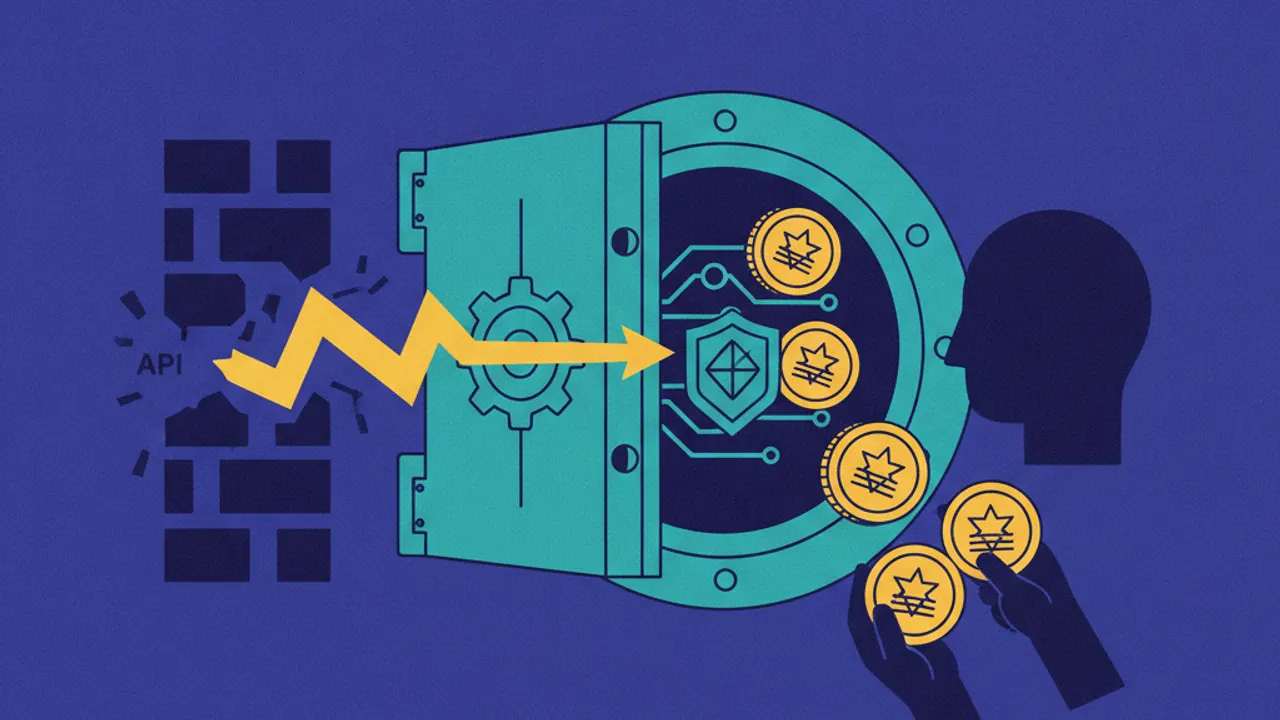
(KI-generiertes Symbolbild: Gemini / AI Connect)

Scientists at the ELLIS Institute Tuebingen and the Max Planck Institute for Intelligent Systems uncovered a major security vulnerability in leading AI platforms on August 10, 2026. In the preprint paper designated arXiv:2608.09867, researchers demonstrated a systemic flaw in how encrypted reasoning traces are processed. The vulnerability affects the Application Programming Interfaces of major industry providers including OpenAI, Anthropic, and Google. These vendors transmit hidden model thought processes in encrypted form to client applications to safeguard intellectual property.

The primary vulnerability lies in the fact that encryption keys are not strictly isolated per user session. Because encryption protocols are implemented uniformly across model families, attackers can exploit this structural oversight. Researchers proved that an encrypted reasoning trace intercepted from an advanced model can be forwarded directly to a different instance. This circumvents the proprietary protection mechanisms designed by model creators.

During practical testing, experts redirected the encrypted reasoning trace from the flagship model Claude Opus to a smaller model within the same family named Claude Haiku. By executing a targeted prompt injection attack on the smaller system, they successfully extracted the entire reasoning process in plaintext. The lighter model decrypted the payload internally and exposed the confidential intermediate steps. According to the authors, this vector applies similarly across other major vendor ecosystems.

This revelation poses severe operational security risks for the global financial sector. Leading investment banks, hedge funds, and corporate trading desks increasingly rely on autonomous AI agents to build proprietary trading strategies and process risk models. If these sensitive reasoning traces are intercepted and decoded via lighter API endpoints, firms risk exposing critical commercial secrets. Furthermore, compliance risks rise significantly if personally identifiable financial information is compromised.

The research team urges AI developers to redesign their API key management architectures immediately. System administrators must implement cryptographic isolation for individual client sessions to block cross-model payload execution. Until vendors patch these interface flaws, institutions using multi-model agent pipelines should exercise extreme caution. The study highlights how architectural trade-offs in cloud interfaces can compromise data privacy.

What this means for you

For enterprise IT managers and financial institutions, this vulnerability means that standard encrypted API responses from major AI vendors cannot currently guarantee trade secret protection. Organizations must audit their multi-model workflows and restrict how outputs are passed between different LLM tiers. Relying solely on vendor-side encryption is insufficient without session-specific isolation.

Perspectives

Coverage: 1× US · 2× Other

One story, several angles: how each source frames the topic, each with a verbatim quote.

Leaning: 1× Vendor PR

  • vertexaisearch.cloud.google.comVendor PRUS

    This source highlights that encrypted reasoning blocks from frontier AI models are not secure and can be decrypted by weaker models from the same provider.

    Original quote

    A new paper shows encrypted reasoning blocks from Anthropic, OpenAI, and Google are interchangeable across sessions, users, and models.

    vertexaisearch.cloud.google.com
  • aiweekly.coOther

    This source focuses on previously ignored researcher warnings, the likely root cause of a global key, and practical advisory steps for teams.

    Original quote

    Encrypted reasoning cracked across Anthropic, OpenAI, Google

    aiweekly.co

Source classification is maintained editorially (political spectrum only where consensus is broad; vendor communication is PR, not journalism). Unlabelled sources are unclassified: we do not guess.

Evidence

Solidly sourced
62/100
  • Researchers from the ELLIS Institute Tuebingen and the Max Planck Institute published preprint arXiv:2608.09867 detailing an API vulnerability on August 10, 2026.

    single source
  • Major AI providers including OpenAI, Anthropic, and Google fail to isolate encryption keys on a per-session basis for reasoning traces.

    single source
  • Researchers demonstrated that encrypted reasoning from Claude Opus can be extracted in plaintext via Claude Haiku using prompt injection.

    single source

The evidence score is computed, not hand-set: from confidence, the number of sources and the share of verified statements.

Source & transparency

As of: August 12, 2026

AI-generatedAI-generated: produced automatically from vetted sources with technical quality checks (source, quote and figure verification); no human sign-off of each item before publication

Sources
3
Verified statements
0 / 3
Evidence score
62Solidly sourced

Want to put this into practice?

We connect you with suitable AI providers from the DACH region, free of charge and without obligation.

What's next?