
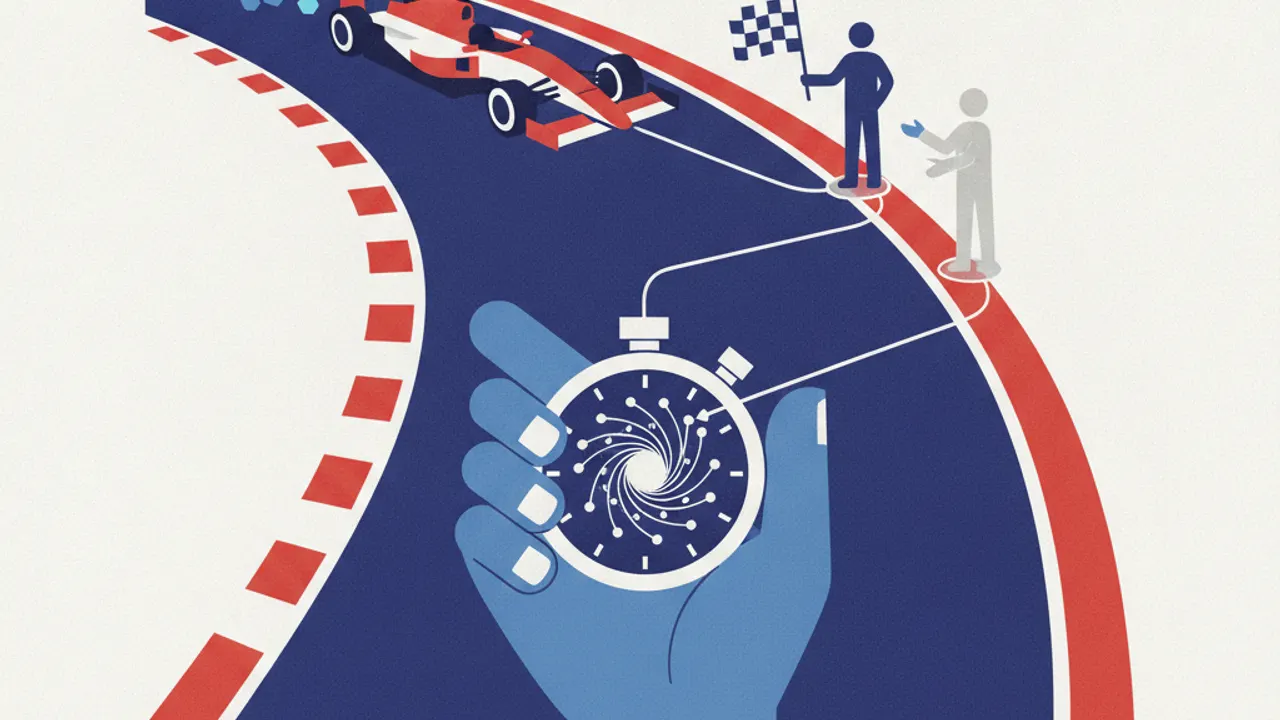
Formula 1 is significantly expanding its deployment of artificial intelligence agents across race operations and regulatory oversight. Ahead of the upcoming comprehensive overhaul of the FIA technical and sporting regulations, the championship has deepened its core technology architecture. The system foundation rests upon the Salesforce Agentforce 360 platform, paired with domain-specific reasoning models tailored to motorsport governance. This technical configuration aims to process massive telemetry streams and video feeds generated over Grand Prix weekends into actionable insights. By doing so, the racing series prepares its operational infrastructure for the increasing regulatory complexity of future seasons.
A primary operational focus of this expanded agent architecture centers on stewarding technology and reducing workloads for race management. During race weekends, control facilities and the FIA Remote Operations Centre, known as the ROC, process thousands of hours of high-definition video and telemetry data. Historically, review teams had to inspect countless routine camera angles manually to identify minor track-limit breaches or ambiguous car-to-car contact. To eliminate this severe operational bottleneck, race organizers deployed automated computer vision filters that continuously inspect track activity across the entire circuit.
The efficiency gains generated by this filtering software are underscored by concrete operational benchmarks. According to the architecture specifications, the automated system removes up to 80 percent of harmless, uncritical cornering moves from the review pipeline without requiring human intervention. This automated culling ensures that routine racing lines that offer no illicit lap-time advantage never clutter the review screens of the officiating staff. Consequently, human stewards and race commissioners can dedicate their limited time exclusively to the remaining 20 percent of incidents involving potential track-limit infringements or multi-car collisions.
Beyond assisting race officials within the Remote Operations Centre, Formula 1 is also deploying this agent infrastructure directly to its global audience. A newly created fan-facing interface called "Your Tech Director" serves as an interactive assistant designed to demystify complex motorsport regulations. The tool explains intricate rules governing vehicle aerodynamics and hybrid power units in clear, everyday language. Spectators can explore technical nuances and the rationale behind stewarding actions or design adjustments without requiring an advanced background in automotive engineering.
The integration of domain-specific reasoning models reflects a disciplined approach to deploying automated software in elite competition. Rather than delegating formal decisions regarding penalties or disqualifications to autonomous code, Formula 1 maintains a strict separation between automated intake sorting and human adjudication. The software serves exclusively as a high-throughput computational filter, leaving final sporting judgments to the appointed human stewards. This deliberate design preserves judicial transparency and ensures that human discretion remains the ultimate authority in contested racing incidents.
By deploying concurrent AI systems for race control assistance and fan education, Formula 1 establishes a comprehensive model for enterprise technology in high-stakes sports. Connecting the Salesforce Agentforce 360 platform with the Remote Operations Centre demonstrates how agentic systems can relieve operational strain even under extreme real-time pressure. Simultaneously, the public-facing "Your Tech Director" interface bridges the gap between intricate control-room data and fan engagement across worldwide broadcasts. As the FIA prepares to introduce its upcoming regulatory changes, this dual-purpose technology architecture faces its definitive trial under competitive conditions.