
Skip to content
AI ConnectPowered by VELENTIS
AI-generated1 min

Flue 2 Brings React Principles to AI Agents: Fred Schott Unveils Modular Harness

Astro creator Fred Schott has released Flue 2. The framework utilizes React-style hooks to dynamically configure agent tools and contexts at runtime for gaming and interactive media.

This article was AI-generated and published automatically. Context, labelling and all sources at the end of the article.

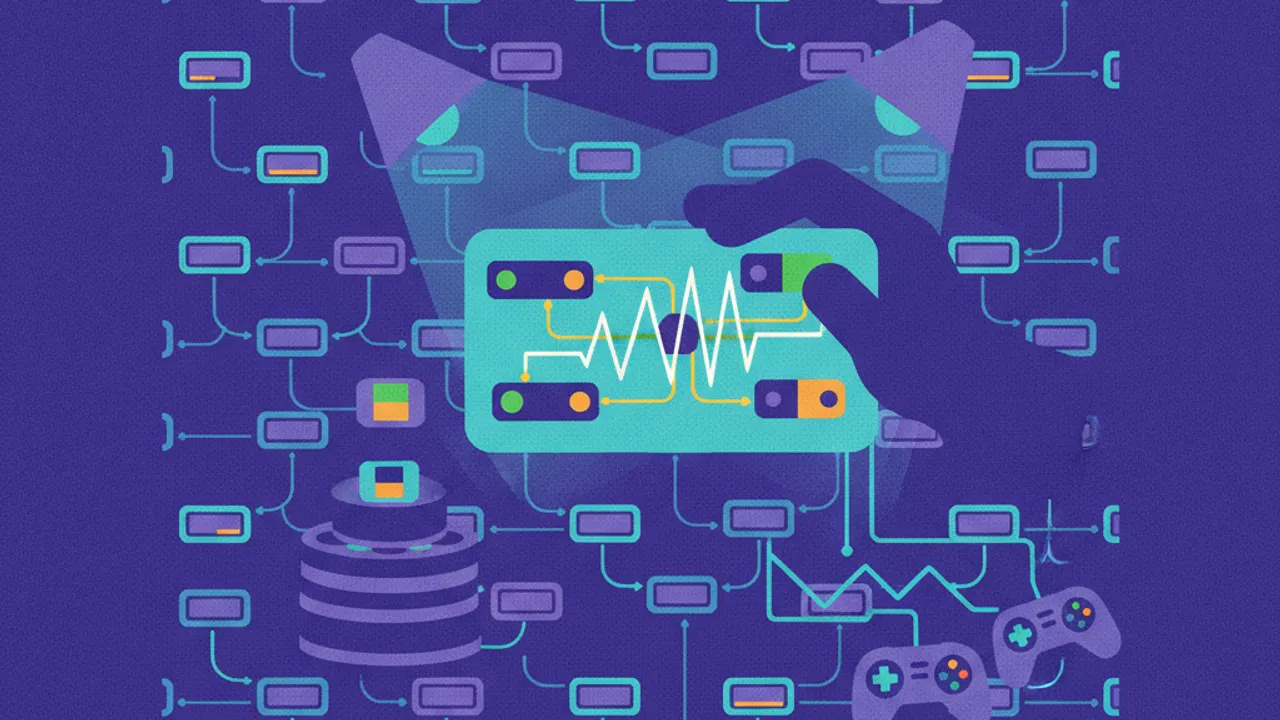
(KI-generiertes Symbolbild: Gemini / AI Connect)

Astro creator Fred Schott has unveiled version 2 of his JavaScript and TypeScript agent framework, Flue, via the Latent Space platform. The update intentionally borrows established design patterns from frontend web development, specifically adopting the concept of React hooks. Instead of relying on static routing setups, Flue 2 allows developers to dynamically equip AI agents with tools, subagents, and memory contexts right before each model call.

At the core of the framework are declarative hooks such as useSkill(), useTool(), and useSubagent(). With these primitives, autonomous agents can reconfigure their context, capabilities, and functional roles on the fly during runtime. This design addresses long-standing limitations in previous agent frameworks, where rigid, pre-defined routing paths struggled to handle unpredictable inputs or dynamic state changes.

The architecture holds significant promise for the interactive gaming and entertainment sectors. Game developers can leverage modular harnesses to build context-aware non-player characters (NPCs) that dynamically manage memory logs and activate skills depending on the game environment. Rather than traversing predetermined, static dialog trees, in-game characters can now support flexible narrative branching tailored to player actions.

The release of Flue 2 arrives alongside intense efficiency gains across multimodal foundation models. Systems such as Google DeepMind's Gemini 3.7 Flash and ultrafast tiers from OpenAI continue to drive down latency and compute costs for real-time media workflows. When combined with modular harnesses, these low-latency models enable studios to integrate generative logic directly into engines like Unreal Engine 5 and Unity.

Simultaneously, broader entertainment workflows are moving away from purely probabilistic generation toward deterministic control. Film and visual effects pipelines increasingly rely on depth maps and explicit lighting parameters to replace prompt guesswork with repeatable directorial controls. Meanwhile, major streaming platforms are introducing strict algorithmic deprioritization to curb the influx of low-grade synthetic mass uploads and protect human rights holders.

What this means for you

For game and software engineers, Flue 2 bridges the gap between modern web frontend paradigms and complex agent orchestration. Utilizing familiar hook patterns simplifies the creation of dynamic, state-aware NPCs and adaptable creative pipelines without requiring bespoke routing architectures.

Perspectives

Coverage: 3× Other

One story, several angles: how each source frames the topic, each with a verbatim quote.

  • latent.spaceOther

    Latent Space covers the release of Flue 2 in depth, emphasizing how React-style hooks and a foundational harness make agents more dynamic at runtime.

    Original quote

    There is no agent without a harness.

    latent.space
  • aiweekly.myOther

    AI Weekly summarizes the announcement, emphasizing practical implications for developers, especially the shift away from file-based routing toward dynamic reconfiguration.

    Original quote

    Fred Schott, creator of the Astro web framework (acquired by Cloudflare in January), has released Flue 2

    aiweekly.my

Source classification is maintained editorially (political spectrum only where consensus is broad; vendor communication is PR, not journalism). Unlabelled sources are unclassified: we do not guess.

Evidence

Solidly sourced
62/100
  • Fred Schott unveiled version 2 of his JavaScript/TypeScript agent framework Flue via Latent Space.

    single source
  • Flue 2 adapts React hooks such as useSkill(), useTool(), and useSubagent() to dynamically reconfigure agents at runtime.

    single source
  • Streaming platforms are tightening algorithmic deprioritization for functional background audio to defend royalties against AI slop.

    single source

The evidence score is computed, not hand-set: from confidence, the number of sources and the share of verified statements.

Source & transparency

As of: August 15, 2026

AI-generatedAI-generated: produced automatically from vetted sources with technical quality checks (source, quote and figure verification); no human sign-off of each item before publication

Sources
3
Verified statements
0 / 3
Evidence score
62Solidly sourced

Want to put this into practice?

We connect you with suitable AI providers from the DACH region, free of charge and without obligation.

What's next?