
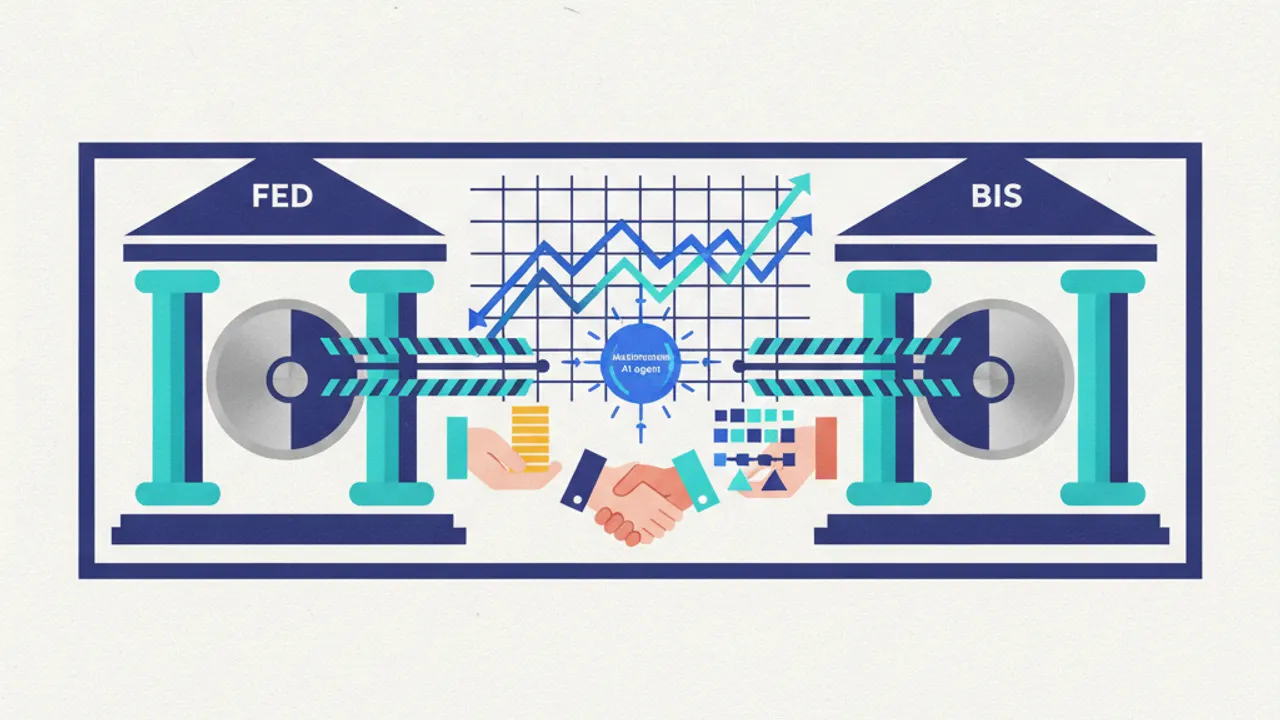
On October 5, 2026, the Bank for International Settlements (BIS) published a landmark keynote address delivered by US Federal Reserve Governor Christopher J. Waller. Titled "Payments in the age of AI agents" and delivered at the Sibos 2026 conference in Miami, the speech represents the US central bank's first comprehensive regulatory framework addressing autonomous software agents within global payment rails. Waller made it clear that established financial architectures must adapt to an operating environment where automated algorithmic actors, rather than human operators, initiate and settle financial transactions.
At the heart of Waller's taxonomy lies a sharp regulatory distinction between two fundamental operating modes: agent-assisted and agent-delegated commerce. In the assisted model, the artificial intelligence handles research, evaluates pricing terms, and prepares transaction templates, while the final payment authorization remains firmly with human operators. Conversely, under the delegated framework, users transfer real transactional power to the software. In this mode, the agent executes payments independently within deterministic budgets and pre-programmed parameters.
The Federal Reserve highlighted significant commercial value for delegated agents within recurring B2B procurement and corporate liquidity management. Autonomous software can take over complex corporate treasury functions, including real-time foreign exchange routing and intraday liquidity netting across cross-border payment networks. Rather than waiting for traditional batch processing windows, intelligent agents can monitor liquidity pools around the clock, optimize currency conversion timing, and substantially lower international transaction costs.
Waller balanced these economic prospects with stark regulatory warnings, specifically concerning contractual accountability. The Fed Governor urged financial institutions to formalize liability allocation frameworks contractually before the first legal disputes involving autonomous misallocations emerge. If an agent miscalculates foreign exchange trends, misinterprets budgetary constraints due to software glitches, or executes unauthorized payments, clear rules must determine whether liability falls upon the software vendor, the processing bank, or the delegating client.
Systemic vulnerability to automated cyberattacks and algorithmic contagion formed another critical pillar of the address. If thousands of interconnected financial agents execute transactions at high frequency, targeted API exploits or operational errors could transmit shocks across banking rails in fractions of a second. The Federal Reserve is therefore requiring commercial banks to deploy deterministic fail-safes and automated circuit breakers to stop cascading failures across interbank settlement systems.
The joint positioning of the Federal Reserve and the BIS signals an end to unregulated experimentation with autonomous commerce across major financial institutions. The global banking sector is now compelled to reconcile algorithmic speed with absolute auditability. For developers and financial service providers, building future enterprise systems will require embedding deterministic compliance barriers directly into software code to comply with emerging regulatory mandates for autonomous payment mandates.