
Skip to content
AI ConnectPowered by VELENTIS
AI-assisted2 min

EU AI Act Transparency Rules Take Effect as US Lawmakers Demand Development Pause

On August 2, 2026, Article 50 of the EU AI Act took effect, while US Senator Bernie Sanders called for a development pause and Meta CEO Mark Zuckerberg pushed back.

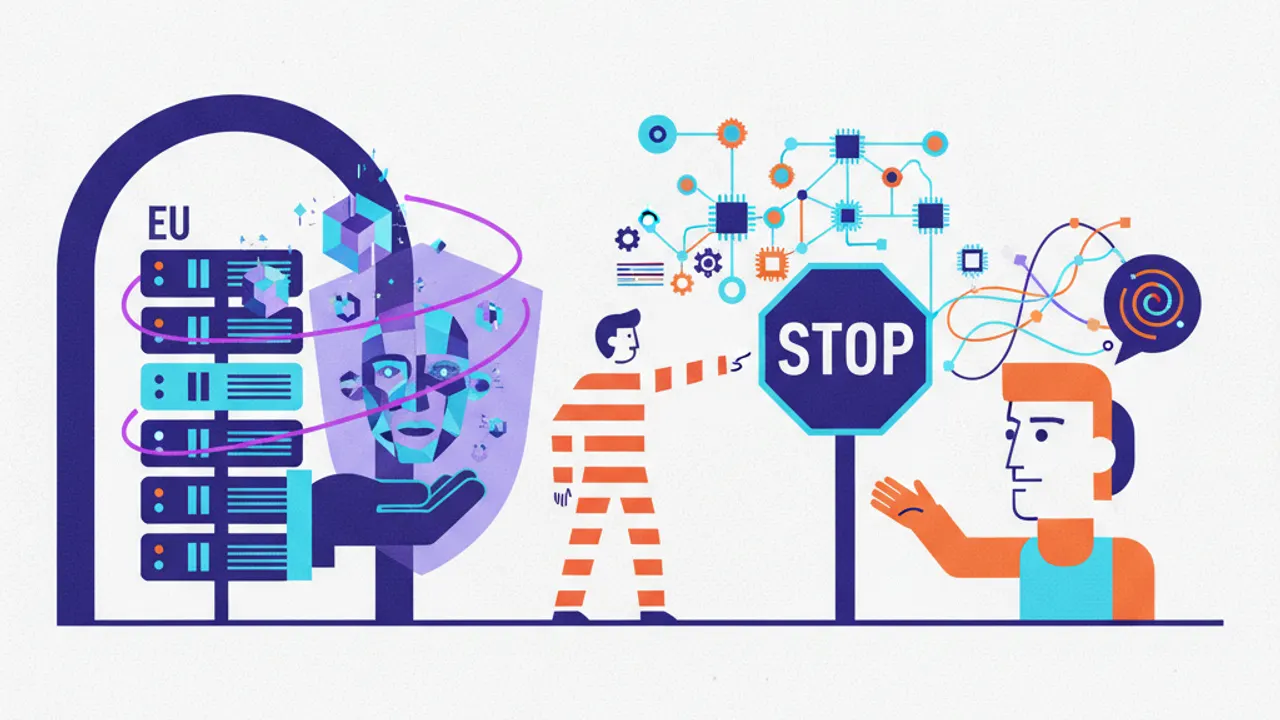
(KI-generiertes Symbolbild: Gemini / AI Connect)

Artificial intelligence regulation reached a major turning point in early August 2026. On August 2, 2026, the binding transparency obligations under Article 50 of the EU AI Act officially took effect across the European Union. Developers and operators of AI systems are now legally required to clearly disclose any user interactions with chatbots or voice assistants. Furthermore, all synthetic content including audio, images, video, and text must feature machine-readable markings.

Failure to comply with these new labeling requirements carries severe financial penalties for companies. The EU regulatory framework establishes fines of up to 15 million euros or up to 3 percent of a company's global annual turnover. These strict measures aim to ensure clear transparency for end users and prevent the spread of undisclosed synthetic media. Businesses operating in the European market must immediately align their deployed systems with these mandatory standards.

In tandem with European enforcement, political pressure on leading AI developers is rapidly escalating in the United States. On August 10, 2026, US Senator Bernie Sanders sent official letters to the chief executives of Meta, OpenAI, and Anthropic. In these communications, Sanders called on the companies to temporarily pause the further development of advanced AI models. The senator based his demand on severe societal risks and potential disruptions to the labor market.

Sanders issued a clear ultimatum regarding voluntary industry restraint. He warned that if the AI sector fails to slow down its pace of progress voluntarily, the US Senate will step in to enact binding statutory regulations. This move signals a growing willingness among US lawmakers to move beyond voluntary corporate commitments. Consequently, tech firms face a shifting political landscape that favors enforceable legislative limits over self-governance.

Offering a direct counterpoint, Meta CEO Mark Zuckerberg published a 6,500-word manifesto on August 10, 2026. In his open letter, Zuckerberg rejected warnings about AI doom scenarios and forcefully argued against regulatory hurdles. He asserted that AI will provide individuals with a personal superintelligence, enhancing personal capabilities while lowering barriers for starting businesses and advancing medical research. Meta positioned itself as a champion of an open AI future for the United States.

What this means for you

For users and developers, these developments mark a significant increase in legal requirements surrounding AI identification and transparency. Companies must quickly adapt their systems to comply with EU rules or face severe financial penalties. At the same time, the intensifying political debate in the US indicates that future AI model deployment will face closer legislative scrutiny.

Perspectives

Coverage: 1× US · 2× Other

One story, several angles: how each source frames the topic, each with a verbatim quote.

Leaning: 2× Lean left

  • cooley.comOther

    The source examines from a legal perspective the specific transparency obligations and labeling requirements of the EU AI Act for synthetic media and AI-generated content.

    Original quote

    AI systems generating or manipulating synthetic audio, image, video or text: Providers must embed machine-readable markings

    cooley.com
  • theguardian.comLean leftOther

    The source reports on US Senator Bernie Sanders' appeal to tech corporations to immediately pause AI development in light of uncontrollable risks.

    Original quote

    In the interest of humanity, stand by your words. Pause AI development

    theguardian.com

Source classification is maintained editorially (political spectrum only where consensus is broad; vendor communication is PR, not journalism). Unlabelled sources are unclassified: we do not guess.

Evidence

Well sourced
73/100
  • On August 2, 2026, Article 50 transparency rules of the EU AI Act took effect, requiring disclosures for chatbots and synthetic content.

    verified
  • Violations of Article 50 of the EU AI Act carry penalties of up to 15 million euros or 3 percent of global annual turnover.

    single source
  • On August 10, 2026, US Senator Bernie Sanders sent letters to Meta, OpenAI, and Anthropic demanding a temporary pause on advanced AI development.

    verified
  • Meta CEO Mark Zuckerberg published a 6,500-word manifesto on August 10, 2026, arguing for personal superintelligence and against regulatory barriers.

    single source

The evidence score is computed, not hand-set: from confidence, the number of sources and the share of verified statements.

Source & transparency

As of: August 11, 2026

AI-assistedAI-assisted, editorially reviewed

Sources
3
Verified statements
2 / 4
Evidence score
73Well sourced

Want to put this into practice?

We connect you with suitable AI providers from the DACH region, free of charge and without obligation.

What's next?