
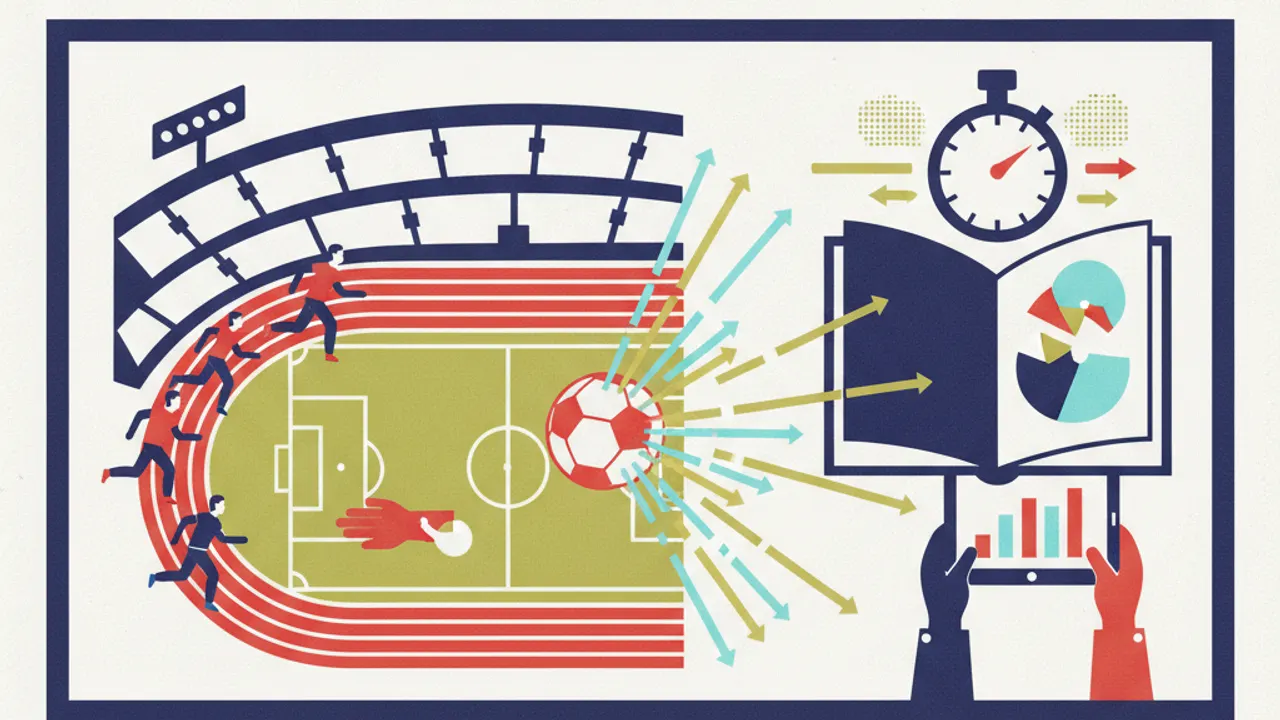
American sports network ESPN has officially begun deploying generative artificial intelligence to produce written recaps for professional sports matches. The live rollout launched in early September 2026, focusing initially on games from the National Women’s Soccer League and the Premier Lacrosse League. Every automated story carries the explicit byline "ESPN Generative AI Services" to ensure transparency for readers. The system transforms live match data streams directly into readable post-game summaries shortly after the final whistle.
Despite the high degree of automation, ESPN is maintaining strict editorial oversight across its publication pipeline. All AI-generated recaps undergo mandatory human review and verification before they appear online, adhering to a human-in-the-loop workflow. This review step is designed to catch factual inaccuracies, context errors, and unnatural phrasing before content reaches the public. Human editors retain final responsibility for every story published under the sports network's banner.
The primary strategic goal of the initiative is to broaden coverage for leagues that have historically faced editorial capacity constraints. Competitions such as the National Women's Soccer League and the Premier Lacrosse League often lacked consistent text coverage due to limited staff resources. By automating standard recaps, ESPN can expand its digital footprint across these underserved sports without diverting personnel from other beats. This approach allows the network to serve dedicated fan communities with immediate match summaries.
Beyond written game recaps, ESPN is also embedding large language models into its fan engagement platforms. In a renewed collaboration with IBM for the NFL season, the broadcaster updated its fantasy football app, which serves more than 12 million active users. The update runs on IBM's watsonx enterprise platform and uses the proprietary Granite language model to generate custom player analyses. The implementation shifts fantasy sports analysis away from static tables toward interactive editorial reasoning.
The central feature of this update, known as "Top Contributing Factors", replaces raw statistical percentages with detailed explanations written in natural language. The system evaluates roster dynamics to provide clear rationales explaining why specific trades or waiver wire claims benefit an individual fantasy team. Rather than deciphering isolated projections, fantasy managers receive accessible causal insights tailored to their specific squad requirements and upcoming matchups.