
The integration of generative artificial intelligence into the modern workplace is advancing rapidly, yet empirical data reveals a growing disconnect between personal time savings and organizational reality. According to the SPICE Report released on November 23, 2026, by the CCIA Research Center and Morning Consult, 47 percent of employed adults in the United States now actively use generative AI in their jobs. This represents a substantial increase from 31 percent in March 2025, with three in four adults having experimented with the technology. Based on eight survey waves surveying over 18,000 respondents, the report calculates that active workplace users save an average of roughly six hours per week.
This reported time savings translates into significant subjective valuation among employees. To give up workplace AI tools for an entire year, the typical median user would demand a salary increase of 2,800 dollars, with the average valuation reaching 5,600 dollars. Projected across approximately 75 million American workers, this reflects a perceived productivity value ranging from 210 to 420 billion dollars annually. Close to one-third of surveyed adults now rely on text and code generation platforms on a daily basis to draft documents, organize workflows, or analyze complex data sets.
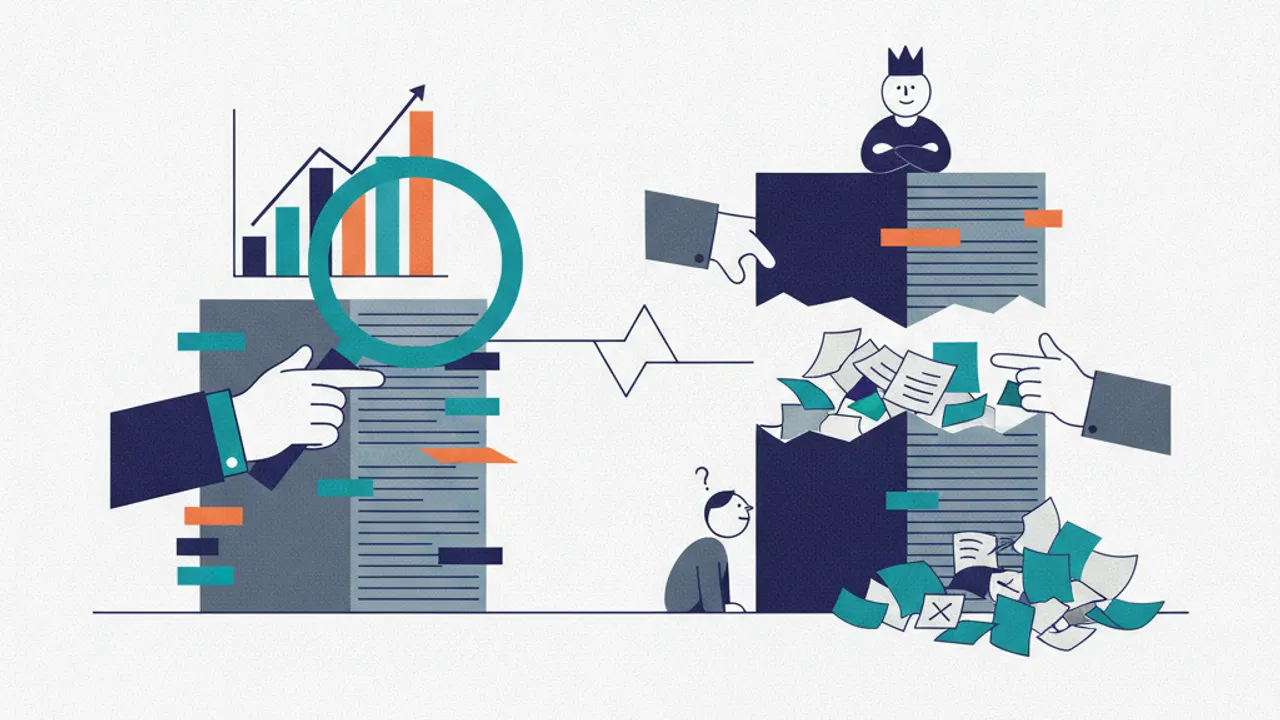
Behind these aggregate figures lies a stark hierarchy divide. A study of 2,000 United Kingdom employees published by PA Consulting indicates that senior executives deploy AI tools more than three times as frequently as entry-level staff. Senior managers turn to AI assistance an average of 6.9 times per day. Furthermore, 70 percent of executives state that AI allows them to complete tasks that were previously impossible for them, compared to just 38 percent of junior workers. A similar gap emerges regarding output quality, with 72 percent of leaders reporting enhanced results compared to only 43 percent of lower-level staff.
At the same time, the British findings expose a significant productivity trap in routine operations. While 60 percent of surveyed staff report working faster with generative tools, 37 percent admit to spending just as much time reviewing, verifying and refining AI-generated work as they would have spent producing it from scratch. Nearly one-third of the workforce currently sees no substantial value in the software. Inaccurate initial outputs and drafting errors end up tying up valuable working hours in repetitive editorial loops rather than freeing up bandwidth for core business tasks.
This tension between individual utility and organizational payoff is equally visible at the macroeconomic level. In a Federal Reserve Board working paper, economists Carollo, Crane, Garcia Molina and Nichols evaluated real-economy indicators surrounding the ongoing technology boom. While foundation model developers now generate roughly 19 percent of total gross revenue across the United States software industry, measurable effects on aggregate labor productivity and net employment remain surprisingly muted. A key factor is import leakage, as approximately 50 percent of capital expenditures for data center hardware flows directly to specialized semiconductor and packaging suppliers in East Asia, reducing domestic multipliers.
Taken together, the recent empirical evidence highlights that deploying generative AI does not automatically yield enterprise-wide efficiency gains. While experienced managers use the technology to delegate broad assignments effectively, junior employees often struggle inside costly verification cycles. Without structured upskilling programs, standardized review processes, and clear governance, the hours saved in early drafting will continue to be consumed by subsequent corrections, leaving broader macroeconomic returns unrealized.