
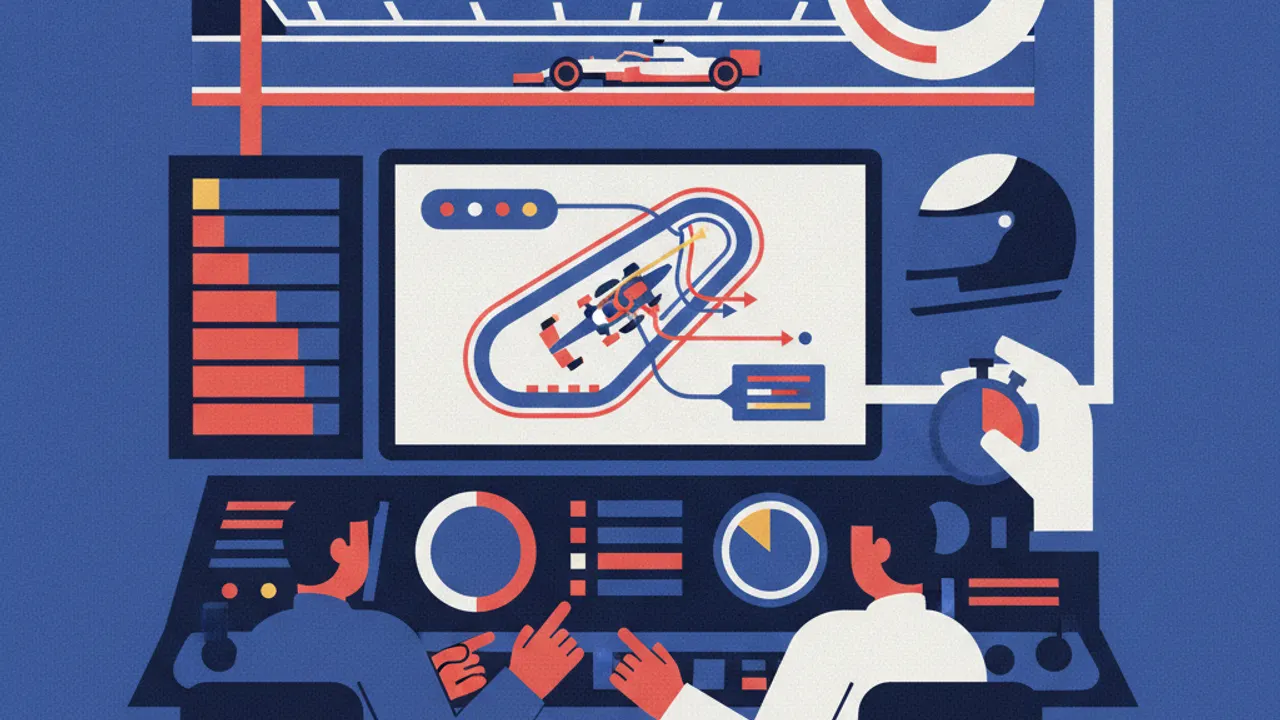
Formula 1 is increasingly shifting critical tactical decision-making to automated systems. As recent technology analyses detailing the 2026 championship show, racing teams are heavily deploying autonomous AI strategy agents and machine learning-driven energy management on their pit walls. This transformation is accelerated by expanding partnerships, including Red Bull Racing's collaboration with Oracle and Williams' work with Anthropic.
At the core of this technical evolution are dedicated AI Strategy Agents operating continuously during live sessions. These systems simulate thousands of potential race trajectories in sub-second intervals, constantly updating their predictive models with dynamic variables such as tire degradation curves, weather shifts, safety car probabilities, and competitor undercut threats.
Rather than outputting static spreadsheets, these systems deliver strategic recommendations through natural language interfaces directly to race engineers. This allows pit wall tacticians to evaluate concrete tactical options within seconds, significantly reducing latency when responding to unexpected on-track incidents or yellow flags.
Simultaneously, the power unit regulations introduced for the 2026 season present unprecedented operational challenges. With an increased reliance on electric power output within the powertrain, managing state-of-charge cycles has become a primary performance differentiator that exceeds the limits of manual calculation.
To prevent energy clipping on full-throttle straights, teams are turning to predictive machine learning algorithms. These models forecast and automate battery charging and deployment profiles for specific track sectors, ensuring drivers receive maximum electrical boost when needed without draining the energy store prematurely.
The integration of language models, probabilistic simulation, and real-time telemetry represents a fundamental operational shift in modern motorsport. While human engineers retain final authority over pit stop timing and driver instructions, artificial intelligence has established itself as an indispensable co-pilot for high-velocity tactical decisions.