
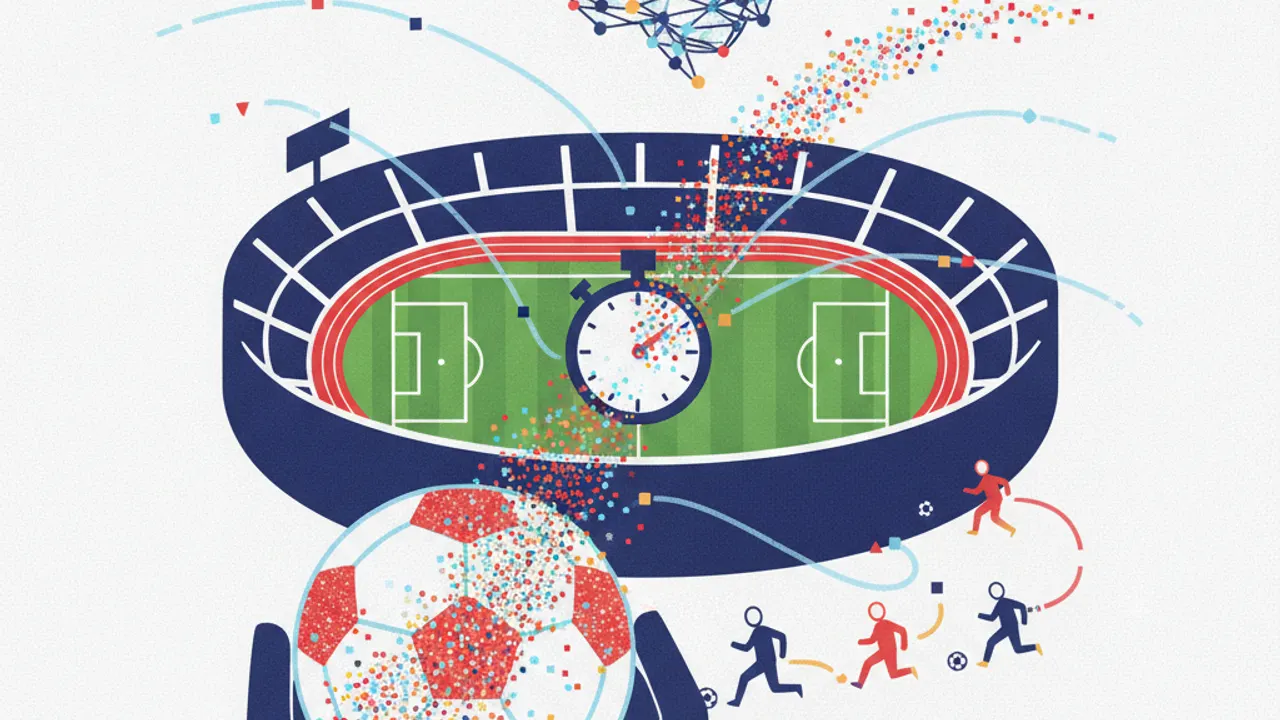
During the Supercup weekend at Signal Iduna Park in Dortmund, the German Football League (DFL) presented its expanded technology and media roadmap. DFL chief executive Steffen Merkel outlined how artificial intelligence will govern essential areas ranging from tactical performance metrics to international broadcast distribution. The move marks a decisive commitment by German professional football to automate its high-volume data operations.
The technical backbone of this initiative relies on an expanded cloud infrastructure with AWS. Under the new architecture, more than 200 million data points will be gathered and processed per match in real time. The platform integrates positional data, match event logs, and optical 3D tracking to construct an instantaneous digital twin of the action on the pitch.
Generative AI models are taking a prominent role in media generation. According to the DFL, the newly deployed pipeline can produce multilingual live text feeds and automated video highlight clips within just seven seconds of a match event. This rapid generation pipeline is aimed at serving a fragmented global audience across multiple social and digital platforms.
Beyond content generation, the real-time processing directly enhances broadcast graphics and tactical toolkits. Advanced indicators such as Match Momentum and complex pressure analysis will be integrated into live video feeds for rights holders worldwide. Simultaneously, identical data feeds will be supplied to club coaching staffs to inform in-game tactical adjustments.
The Bundesliga's AI push mirrors a broader shift across global sports organizations embracing algorithmic officiating and production workflows. While the NFL transitions to synchronized 8K optical tracking for line-to-gain rulings and the IOC prepares computer vision for the Milano-Cortina Winter Games, the DFL is focusing its resources heavily on automated content delivery and live data enrichment.