
At the opening of the AI, Data and Quantum Summit (AIDAQ) in Berlin, the digital association Bitkom presented new calculations regarding German economic development. Based on research data from market intelligence firm IDC, total spending on AI software, services, and hardware in Germany will increase by 48 percent in 2026, reaching 28.7 billion euros. Compared to the previous year, when total volume stood at 19.4 billion euros, this represents a significant market acceleration across all commercial sectors. Looking further ahead, industry analysts already project the German AI market volume to comfortably surpass the threshold of 40 billion euros in 2027.
Generative AI serves as the primary growth engine of this expansion, with expenditure nearly doubling in the current year from 5.7 to 11.5 billion euros. This specific technology segment now accounts for roughly 40 percent of total German artificial intelligence spending. AI software represents the largest individual expenditure category, expanding by 65 percent to reach a commanding volume of 16.0 billion euros. According to industry observers, these figures confirm that corporate Germany is moving beyond experimental pilot projects toward broad operational deployments across industrial and service sectors.
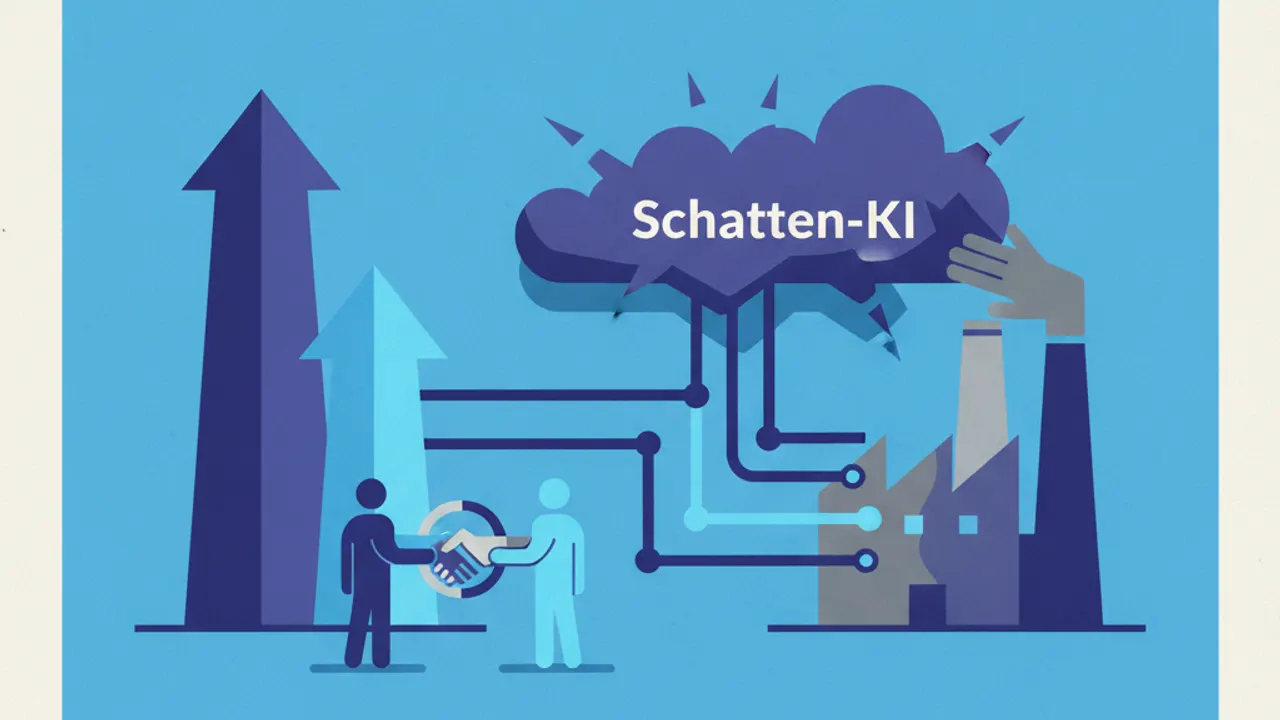
Alongside this rapid expenditure growth, economic researchers warn of substantial governance gaps across German enterprises. A study by the Cologne Institute for Economic Research (IW Koeln) surveying 5,000 employees shows that 29.1 percent of staff use unauthorized AI tools that employers have neither vetted nor approved. This trend toward shadow AI is particularly prevalent in small businesses with fewer than 50 staff, where the unauthorized adoption rate hits 33.5 percent. In large corporations, the figure stands at 25.5 percent, while among workers under the age of 30, it climbs to 38.4 percent.
This widespread unsanctioned tool usage is largely driven by overly restrictive approval procedures or insufficient alternatives provided by internal corporate IT departments. The resulting informal practices create considerable operational risks regarding compliance, intellectual property protection, and business-critical data exposure. Companies find themselves trapped in a difficult operational dilemma between maintaining innovative agility and enforcing necessary regulatory governance. Without clear internal guidelines and accessible approved software alternatives, organizations remain vulnerable to severe data leakage in daily operations.
Beyond security vulnerabilities, unexpected operational expenses increasingly threaten corporate budgets across the Mittelstand. Reports published by the Frankfurter Allgemeine Zeitung highlight that uncapped application programming interfaces and autonomous agents trigger severe cost traps known as tokenmaxxing. Experts from PwC note that multi-step agents handling invoice verification or ticket triage quickly generate operating costs of 100 to 300 euros per day and workstation when caught in faulty recursion loops or operating without prompt caching. In response, German IT leaders are accelerating the deployment of dedicated FinOps frameworks and strict token limits.
The divide between surging investment volumes and practical operational friction illustrates the ongoing maturity test for business leaders. While macro spending figures now reach tens of billions, sustainable implementation requires rigorous management safeguards. Companies must effectively align clear security policies, sanctioned tool access, and proactive cost governance to convert rising AI expenditures into profitable productivity gains over the long term.