
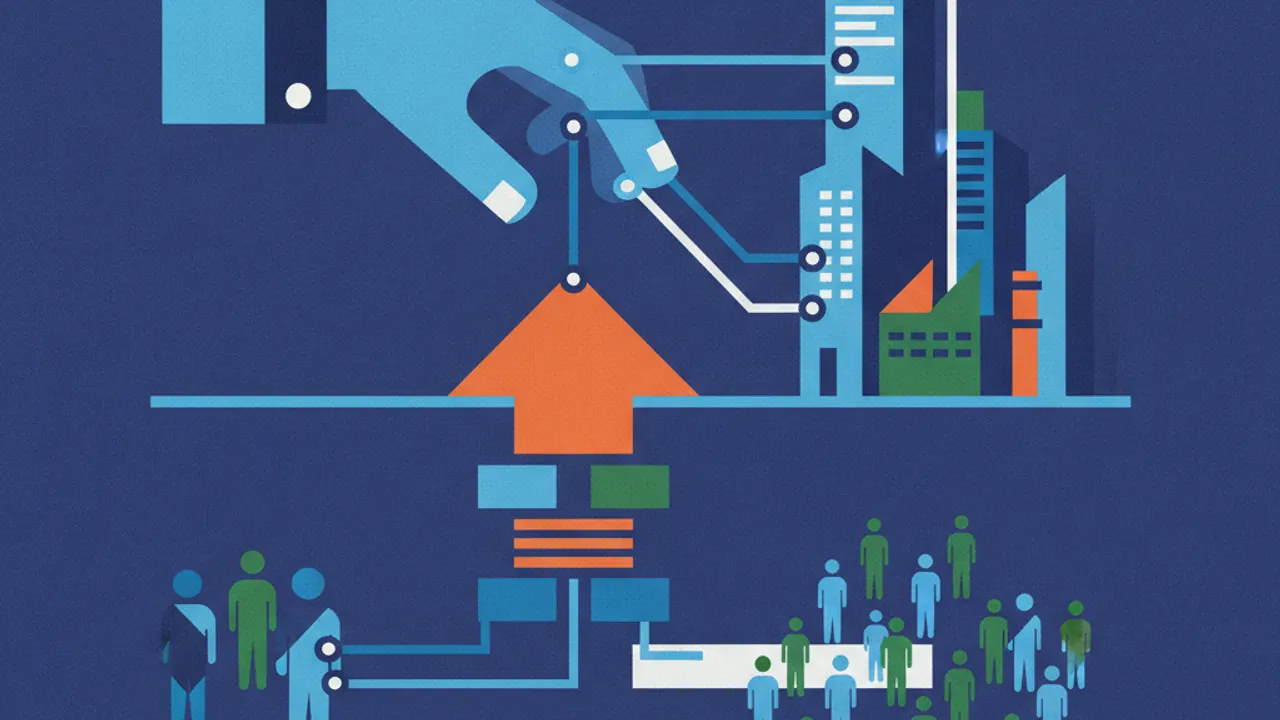
Artificial intelligence is gaining substantial traction across the German economy. According to data released by the Federal Statistical Office, Destatis, 37 percent of enterprises with at least ten employees now employ AI technologies. This figure represents an increase of eleven percentage points year over year, up from 26 percent recorded in 2025. The data indicates that algorithmic and generative automation is increasingly establishing itself in everyday operational routines.
At the same time, official figures reveal a widening adoption gap based on company size. While large corporations with 250 or more employees boast an adoption rate of 73 percent, reflecting a 16 percentage point jump, smaller businesses lag behind. Medium-sized firms with 50 to 249 staff stand at 49 percent adoption. Meanwhile, small enterprises with 10 to 49 employees report only 33 percent, demonstrating a persistent divide against larger industry players.
Regarding specific technology domains, tools for generating image and audio content lead adoption at 59 percent, followed closely by text analysis solutions at 54 percent. Speech recognition software is also widely deployed, accounting for 45 percent of active deployments. Within organizational structures, adoption remains heavily concentrated in marketing and sales at 35 percent, alongside internal administration and office workflows at 31 percent.
The primary obstacles preventing smaller enterprises from rolling out AI tools include a noticeable lack of internal technical skills and expertise. In addition, persistent concerns surrounding data protection, regulatory compliance, and personal privacy continue to stall adoption. Unlike corporate enterprises, smaller businesses often lack in-house legal and specialized technical teams to assess and mitigate implementation risks independently.
Alongside this technological expansion, employment authorities are preparing for significant workforce shifts. Andrea Nahles, head of the Federal Employment Agency, estimated that AI could displace around 800,000 jobs over the next 15 years, while creating a comparable volume of new roles. Nahles urged corporate leaders to tie technological investments strictly to verified productivity gains rather than treating generative tools as short-lived management trends.
Research from the Institute of Applied Work Science indicates that dedicated AI implementations are already delivering measurable efficiency gains. The study also offers relief regarding the regulatory environment: only around 20 percent of operational workplace applications qualify as high-risk under the EU AI Act. For the remaining 80 percent of standard use cases, compliance overhead remains minimal, easing potential administrative burdens for adopting firms.