
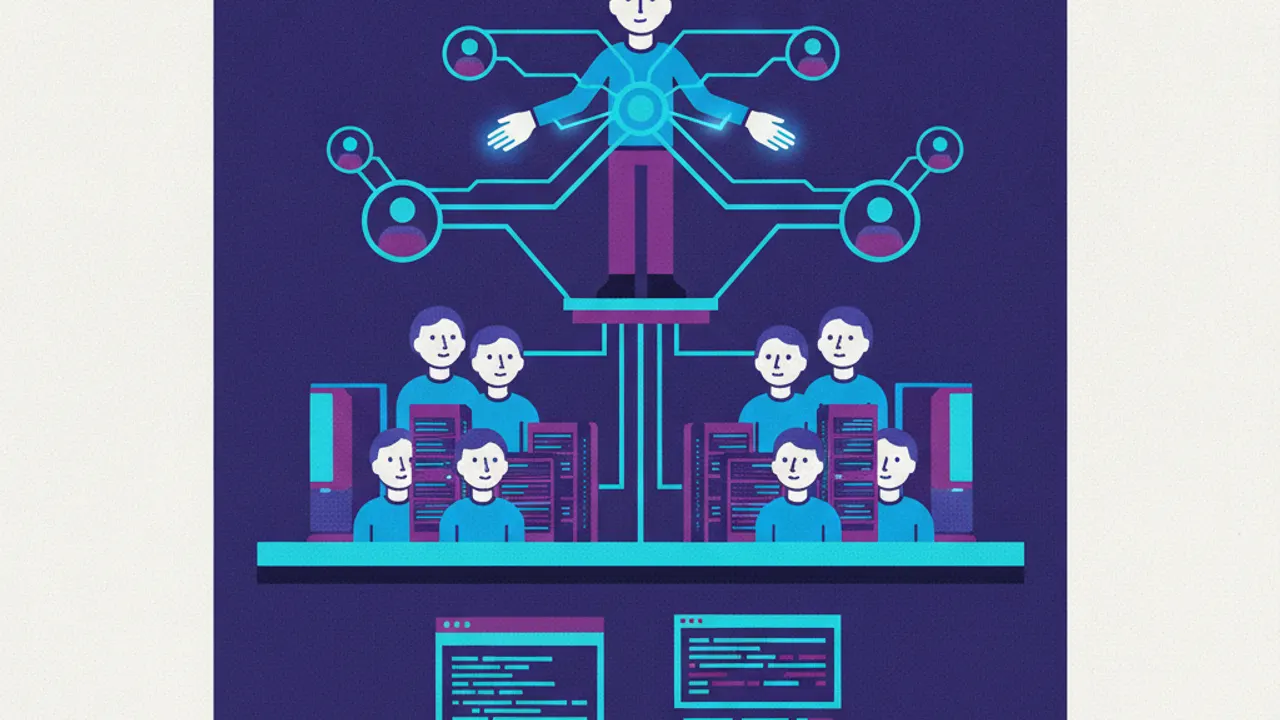
The coding platform Cursor has introduced a fundamental architectural overhaul with the beta release of Cursor Projects. The announcement was published in an official blog post by Alexi Robbins and Fredrika Lindh on behalf of the Ansys Labs company. Moving away from ephemeral task-level dialogs, the platform now relies on persistent, cloud-based workspaces designed to retain project context across several months.
Traditional AI-assisted software development has predominantly operated on a chat-per-task model. Cursor Projects abandons this fragmented structure in favor of long-term development environments. Software engineers no longer need to manually inject architectural guidelines, dependencies, and project history into the context window for every request. Instead, the cloud-based workspace continuously tracks the entire repository state.
At the heart of the new architecture is a specialized Coordinator Agent. This orchestrator does not write any code directly, but functions strictly as a supervisory planner. It assesses high-level project goals, breaks them down into actionable sub-tasks, and delegates implementation across hundreds or thousands of parallel cloud-based sub-agents while supervising the resulting pull requests.
Early operational metrics indicate substantial productivity shifts during demanding engineering workflows. Cursor reports from internal benchmarks and pilot trials that heavy users merge up to six times more pull requests when utilizing the new system. The intense parallelization of code generation accelerates delivery cycles, while simultaneously shifting team workloads toward reviewing machine-generated changes.
To mitigate security vulnerabilities and prevent rogue repository mutations, the vendor has put strict guardrails in place. Direct autonomous pushes into main branches are completely disabled at the platform level. Every operation enforces a mandatory human-in-the-loop mechanism, requiring human engineers to inspect, evaluate, and manually approve every single pull request generated by sub-agents.
This architectural pivot reflects a structural evolution in the professional responsibilities of software engineers. As fleets of autonomous agents take over the mechanical aspects of coding, developers increasingly transition into systems architects and pull request reviewers. Precision in problem framing, task decomposition, and rigorous verification now outweigh the manual authoring of boilerplate source code.