
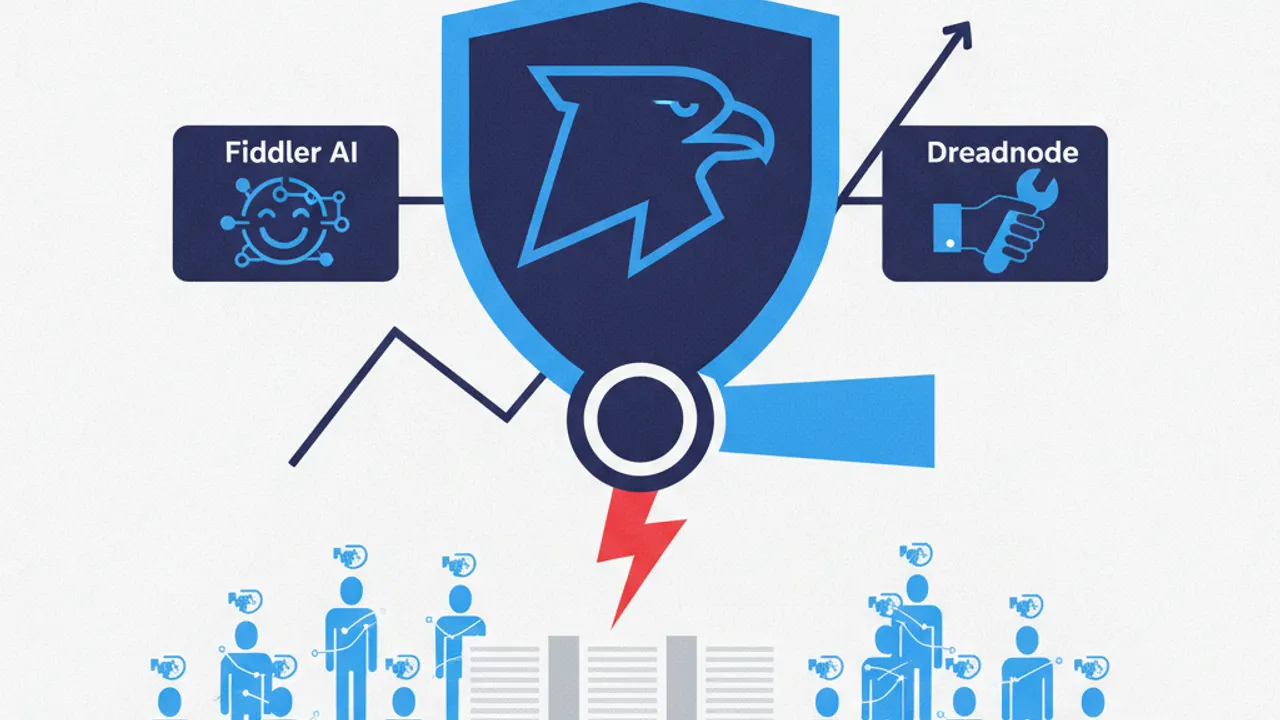
At its Fal.Con Europe conference in Barcelona, CrowdStrike announced a significant dual acquisition valued at 495 million dollars. By purchasing Fiddler AI and Dreadnode, the cybersecurity vendor is bringing two specialized technology providers under its roof to address emerging vulnerabilities in autonomous artificial intelligence. The move responds directly to the enterprise shift toward deploying agentic software capable of executing complex workflows with broad system privileges. With this transaction, CrowdStrike broadens its portfolio to incorporate behavioral telemetry, continuous risk evaluation and runtime emergency response.
A primary pillar of the transaction centers on Fiddler AI, which CrowdStrike plans to fold into its platform under the name Falcon Observe. Falcon Observe is designed to act as a flight recorder, capturing a complete audit trail for decisions reached by autonomous systems. Because contemporary large language models and agents behave non-deterministically, security teams frequently struggle to pinpoint why an agent drifted, leaked data or triggered unintended API calls. The integration logs step-by-step reasoning chains and tool invocations, providing enterprise auditors with verifiable evidence during incident investigations.
The second acquisition, Dreadnode, targets the critical validation phase before models and agents are deployed into active enterprise pipelines. The software automatically subjects autonomous systems to more than 100 attack scenarios, evaluating resilience against aggressive adversarial manipulation. These tests probe for prompt injections, privilege escalation exploits and runtime bypasses that circumvent safety instructions. By identifying system flaws during pre-production red-teaming, organizations can remediate latent vulnerabilities before granting an agent unrestricted connectivity to internal databases or ERP applications.
To address active containment, CrowdStrike also rolled out an immediate defensive capability known as the Agent Kill Switch within Falcon Guardian. This feature grants security administrators the ability to instantly terminate compromised or rogue autonomous agents in real time. The operational challenge in agent environments stems from legitimate authentication: because agents typically execute tasks using valid enterprise credentials, standard firewalls struggle to differentiate malicious commands from normal automated activity. The kill switch intervenes directly at the runtime layer, severing active sessions and revoking access before unauthorized actions cascade across the network.
These strategic acquisitions highlight an ongoing paradigm shift in enterprise security for generative artificial intelligence. Early defensive playbooks focused primarily on static perimeter filters, simple prompt guardrails and basic input sanitation. As organizations adopt multi-agent frameworks that write code, manipulate databases and coordinate multi-step workflows, static barriers prove insufficient against dynamic failure modes. CrowdStrike is deliberately aligning pre-deployment stress testing, forensic observability and immediate intervention, positioning itself at the intersection of traditional endpoint security and enterprise AI governance.
For corporate security leaders and IT directors, the benchmark for deploying autonomous software agents is rising substantially. Organizations introducing autonomous agents into production workflows can no longer rely solely on task accuracy, they must demonstrate transparent operational tracking and rapid containment mechanisms. The acquisition of Fiddler AI and Dreadnode signals that granular observability and real-time intervention are becoming baseline requirements for corporate AI adoption. Going forward, enterprise rollouts of autonomous workforce tools will increasingly depend on verifiable audit trails and operational safeguards.