
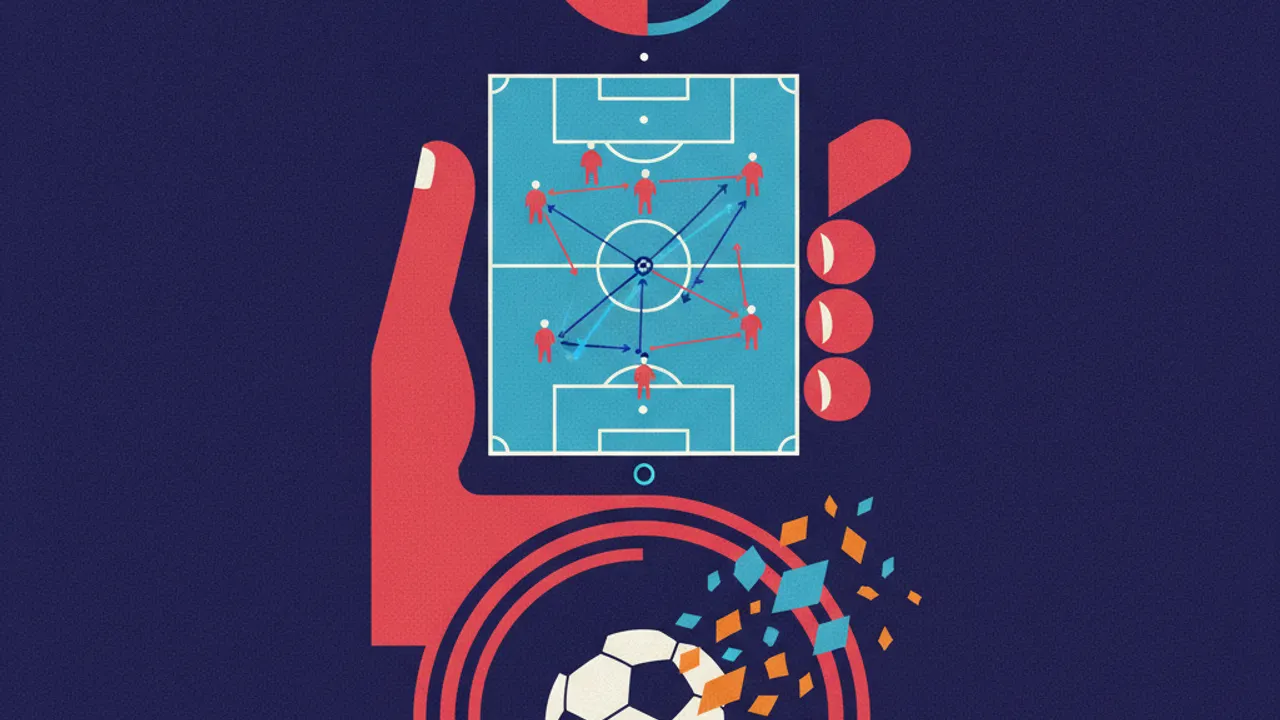
The German Football League, widely known as the DFL, and Amazon Web Services have intensified the real-time rollout of their agentic AI companion named Captain within the official Bundesliga app. This digital assistant is designed to reshape how football supporters experience live broadcasts by offering interactive match breakdowns on demand. Instead of presenting fans with static tables or pre-rendered television graphics, the system serves as a conversational guide directly on the user's smartphone. The tool bridges generative language models with continuous real-time evaluations of pitch dynamics. Through this deployment, the league and AWS are deepening their partnership to modernize digital coverage in professional sports.
The technological backbone of the assistant is built upon AWS cloud infrastructure, specifically leveraging Amazon Bedrock and foundation models from the Amazon Nova series. Over the course of a single ninety-minute match, this processing architecture ingests up to 200 million live data points. The incoming stream incorporates precise optical tracking coordinates for all 22 players, calculated passing angles, and spatial pitch dynamics. These raw data streams are aggregated within fractions of a second and translated into contextual match intelligence. This capability enables the underlying models to identify subtle tactical nuances that human spectators might easily overlook during live play.
A central feature of Captain is its ability to tailor the depth of tactical explanations to each supporter's individual familiarity with the game. Fans can adjust the complexity of generated insights across three predefined knowledge tiers. Casual spectators receive concise, accessible clarifications regarding decisive moments such as fouls or goals, whereas tactically focused enthusiasts can inspect intricate breakdowns of pressing schemes and numerical superiorities. All interactions occur via natural language, allowing users to submit specific queries throughout the match. The assistant responds with targeted explanations aligned directly with the current state of play.
Beyond handling user-submitted queries, the system exhibits autonomous agentic capabilities that trigger proactive interventions during games. The model constantly evaluates pitch events and takes initiative whenever significant developments emerge. If the AI detects relevant tactical adjustments, such as a coach altering their team's core formation, it automatically dispatches push notifications directly to the user's mobile screen. Supporters are similarly alerted when athletes or clubs cross historic milestones or statistical thresholds during the match. These proactive summaries ensure that fans stay informed about strategic developments, even if they are not watching every second of the broadcast.
To enhance the value for supporters, the assistant does not restrict its tactical breakdowns to written text alone. The application pairs its written analyses with automated, video-based scene reviews rendered directly within the smartphone interface. When the model highlights a shift in spatial positioning or a newly formed passing corridor, fans can immediately review corresponding video clips on their devices. This combination of visual evidence and analytical commentary creates an engaging experience that far surpasses conventional text-based tickers. It highlights how modern multimodal AI solutions can convert complex sports analytics into intuitive media formats.
The broader rollout of Captain represents a strategic paradigm shift in the presentation of sports data across professional football. For years, leagues and broadcasters relied heavily on linear broadcasts and static visual overlays, such as the widely recognized Bundesliga Match Facts. The new conversational approach transforms these rigid metrics into an adaptive dialogue, turning spectators from passive consumers into active interrogators of match analytics. Through this initiative, the Bundesliga establishes itself at the leading edge of agentic AI deployments in global sports entertainment. At the same time, the project establishes a new benchmark for how live sporting data will be shared with audiences worldwide.