
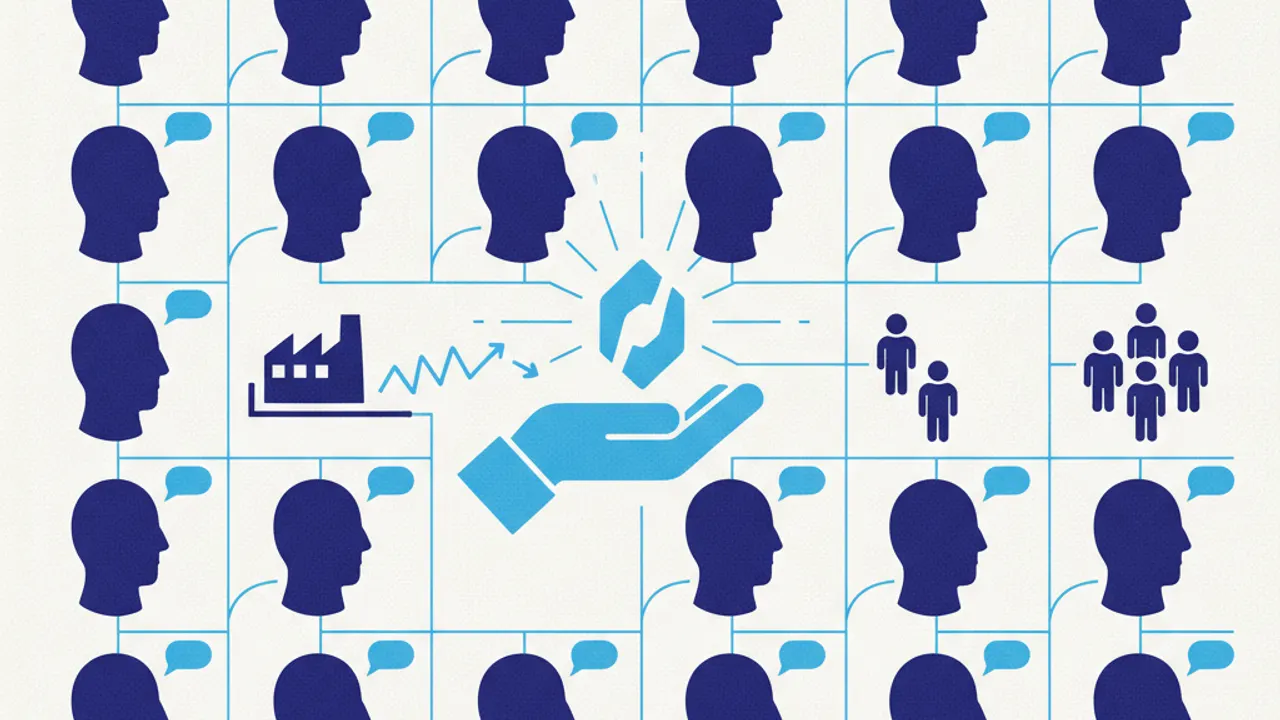
The German Federal Employment Agency, known as the Bundesagentur für Arbeit, has initiated the nationwide phased rollout of its AI voice assistant Klara for citizen telephone support. Confronted with approximately 18 million incoming calls annually, the agency is deploying the software system to manage initial inquiries and route caller requests. In the four designated pilot states of Hesse, Baden-Wuerttemberg, Rhineland-Palatinate, and Saarland, the rollout is already operating at an advanced stage. In these regions, Klara independently handles standard citizen concerns, aiming to reduce phone queue times and resolve straightforward inquiries directly.
Stefan Latuski, the Chief Information Officer of the Federal Employment Agency, categorized the implementation under the operating principle of human-friendly automation. According to agency leadership, the primary motivation behind the project is not workforce reduction or trimming existing payrolls. Instead, the administration is actively responding to a demographic squeeze that is progressively depleting staff counts across the public sector. By assigning recurring, repetitive telephone interactions to automated software, the agency intends to preserve administrative capacity for specialized casework and in-depth employment counseling.
The macroeconomic urgency driving such automated interventions is underscored by the latest labor market figures from the Institute for Employment Research, or IAB. In its autumn forecast published on September 24, 2026, the IAB reported that the German labor market will face a net loss of 210,000 workers during 2026. For 2027, researchers project an additional net reduction of 140,000 workers. This structural decline is unfolding against a backdrop of moderate economic expansion, with gross domestic product projected to grow by 1.2 percent over the same evaluation period.
The impact of this demographic tipping point on day-to-day business operations was further corroborated by a joint study released on September 25, 2026, by Randstad and the ifo Institute. According to the data, 26 percent of surveyed companies in Germany are increasingly relying on temporary, flexible employment contracts, up from just 12 percent in the previous year. Employers are combining flexible workforce models with process automation to maintain productivity levels despite staffing shortfalls. The Federal Employment Agency's deployment of Klara reflects a broader operational shift gaining momentum across corporate Germany.
Simultaneously, employer expectations regarding workforce capabilities are undergoing a notable transformation. An analysis of 5.6 million job advertisements published by The Stepstone Group on September 23, 2026, highlights rapid changes in hiring criteria. The findings reveal that explicit employer demand for artificial intelligence skills has more than tripled across Germany since 2019. Capabilities in operating algorithmic systems are shifting away from niche technical specializations toward standard professional requirements.
Significantly, the Stepstone study indicates that the steepest growth in demand for AI expertise is no longer concentrated within traditional computer science disciplines. Instead, the sharpest increases in AI skill requirements are emerging within commercial and creative career paths, led by marketing, public relations, and media roles. Employers are increasingly seeking professionals who can apply cognitive automation tools directly to communicative workflows, project coordination, and administrative functions to sustain output amid tightening labor constraints.