
Skip to content
AI ConnectPowered by VELENTIS
AI-generated2 min

BSI, TÜV, and Bitkom Warn: German Businesses Face AI Security Gaps and Tech Dependencies

New studies by the BSI, TÜV Association, and Bitkom reveal severe security gaps against AI attacks alongside growing concerns over corporate reliance on foreign technologies.

This article was AI-generated and published automatically. Context, labelling and all sources at the end of the article.

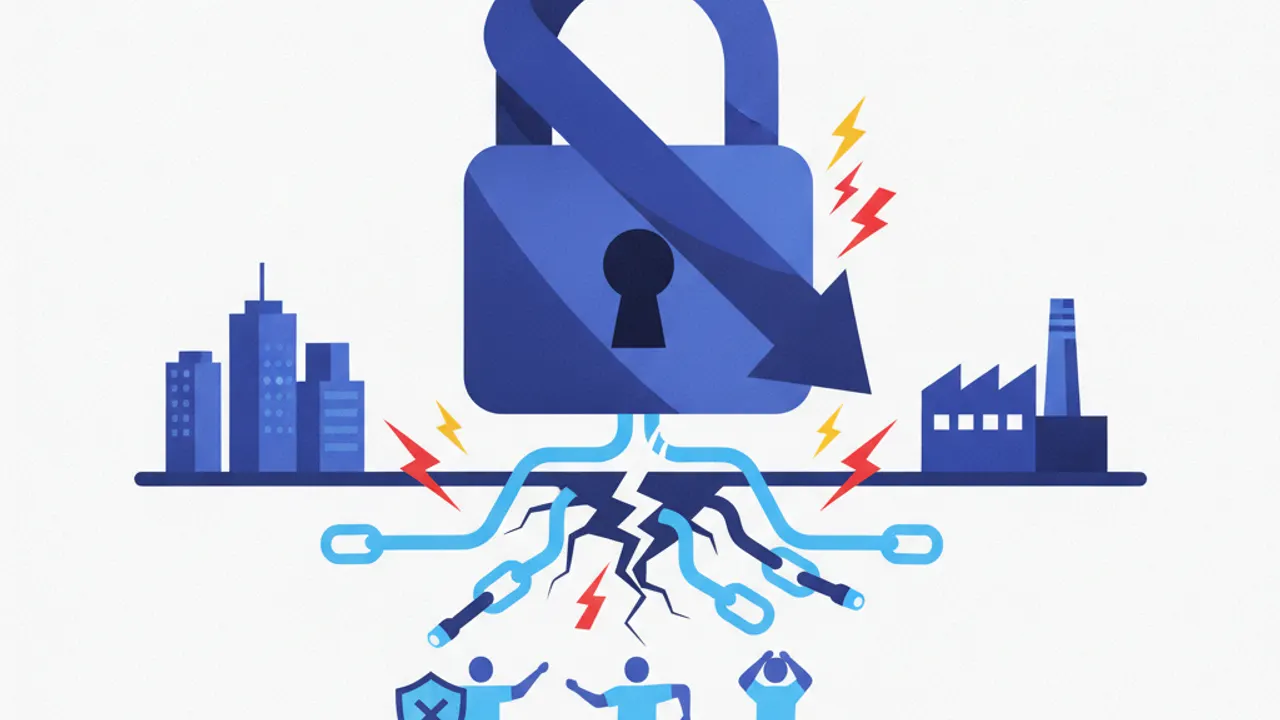
(KI-generiertes Symbolbild: Gemini / AI Connect)

The German economy is confronting a glaring paradox in its adoption of artificial intelligence. While corporate deployment is accelerating rapidly, foundational security safeguards and strategic risk concepts are lagging behind. This is the central finding of two new studies released by the Federal Office for Information Security (BSI), the TÜV Association, and the digital industry group Bitkom. Presented simultaneously, the research depicts a business landscape that is making itself increasingly vulnerable to cyber threats while entrenching deep technological dependencies.

On 19 October 2026, BSI Vice President Thomas Caspers and TÜV Association President Dr. Dirk Stenkamp presented their joint AI Security Study at the Federal Press Conference. Based on a survey of more than 500 enterprises with at least 20 employees, the study documents a tangible rise in novel attack vectors. In total, 17 percent of surveyed companies reported experiencing cyberattacks or fraud attempts involving AI over the past year. Confirmed cases accounted for 4 percent of these incidents, while another 11 percent were classified as strong suspected cases.

Despite this palpable threat environment, the survey exposes alarming deficits in corporate incident readiness. Only 11 percent of all surveyed enterprises currently maintain dedicated security and emergency procedures tailored specifically to AI-related incidents. Although nearly half of all businesses (49 percent) now deploy AI solutions in their day-to-day operations, only 31 percent of these users utilize AI to bolster their own IT defenses. Consequently, the vast majority of firms are integrating algorithmic tools into business workflows without establishing parallel protective barriers.

Alongside operational defense gaps, a representative Bitkom survey of 602 companies highlights significant structural vulnerabilities across the country. Published to coincide with the federal government's Digital Summit, the study cautions against an acute reliance on digital imports. If access to foreign AI models, specialized cloud infrastructure, and semiconductors were suddenly cut off, German companies could survive for an average of just 16 months. While this marks a slight increase from the 14 months recorded in 2025, it underscores a precarious lack of digital sovereignty.

Furthermore, 94 percent of the companies surveyed by Bitkom classify themselves as reliant on foreign technology providers. Geopolitical anxieties have intensified in a particularly pronounced manner, with 73 percent of firms specifically expressing concern about dependence on US technologies. This figure has nearly doubled compared to 2024, when the proportion stood at 38 percent. Corporate decision-makers increasingly fear losing operational autonomy if access to primary American platforms and computing infrastructure is disrupted.

The findings from both reports demonstrate that Germany's corporate AI expansion has created an imbalance between technical deployment and resilience. While generative tools and automated workflows are adopted at high speed, defensive governance and supply-chain sovereignty remain an afterthought. Security analysts warn that capital expenditure on AI-driven efficiency must be accompanied by mandatory incident-response protocols. Without deliberate efforts to foster alternative infrastructure and secure operational pipelines, enterprises risk leaving critical operations exposed to external shocks.

What this means for you

For business executives and IT security officers, these findings present an urgent imperative to treat AI-driven cyber risks as immediate operational threats rather than hypothetical future scenarios. Deploying AI systems without dedicated incident response protocols and defensive countermeasures creates existential operational vulnerabilities. At the same time, heavy reliance on foreign providers makes architectural diversification across models and cloud infrastructure essential to mitigating geopolitical disruptions.

Perspectives

Coverage: 2× EU

One story, several angles: how each source frames the topic, each with a verbatim quote.

Leaning: 1× Industry body

  • industrieanzeiger.industrie.deEU

    The source emphasizes the lack of preparedness among German businesses regarding AI-supported cyberattacks, highlighting that very few companies have established dedicated protective measures.

    Original quote

    „Nur wenige Unternehmen in Deutschland haben Schutzmaßnahmen gegen Cyberattacken mit KI etabliert.“

    industrieanzeiger.industrie.de
  • bitkom.orgIndustry bodyEU

    The association centers on the significant reliance of German business on foreign digital and AI imports, calling for increased investment in digital resilience.

    Original quote

    „Zwei Drittel der deutschen Wirtschaft erwarten eine wachsende Abhängigkeit vom Ausland bei Digitalimporten“

    bitkom.org

Source classification is maintained editorially (political spectrum only where consensus is broad; vendor communication is PR, not journalism). Unlabelled sources are unclassified: we do not guess.

Evidence

Solidly sourced
54/100
  • According to a study by the BSI and the TÜV Association, 17 percent of surveyed companies experienced cyberattacks or fraud attempts involving AI over the past year, including 4 percent confirmed cases and 11 percent suspected cases.

    single source
  • Despite an AI adoption rate of 49 percent, only 11 percent of companies have dedicated emergency processes for AI incidents, and only 31 percent of AI users deploy the technology for their own IT defense.

    single source
  • A Bitkom survey of 602 companies revealed that German firms could survive an average of only 16 months if digital imports were abruptly cut off.

    single source
  • The proportion of companies concerned about dependence on US technologies surged from 38 percent in 2024 to 73 percent in 2026, according to Bitkom.

    single source

The evidence score is computed, not hand-set: from confidence, the number of sources and the share of verified statements.

Source & transparency

As of: October 20, 2026

AI-generatedAI-generated: produced automatically from vetted sources with technical quality checks (source, quote and figure verification); no human sign-off of each item before publication

Sources
2
Verified statements
0 / 4
Evidence score
54Solidly sourced

Want to put this into practice?

We connect you with suitable AI providers from the DACH region, free of charge and without obligation.

What's next?