
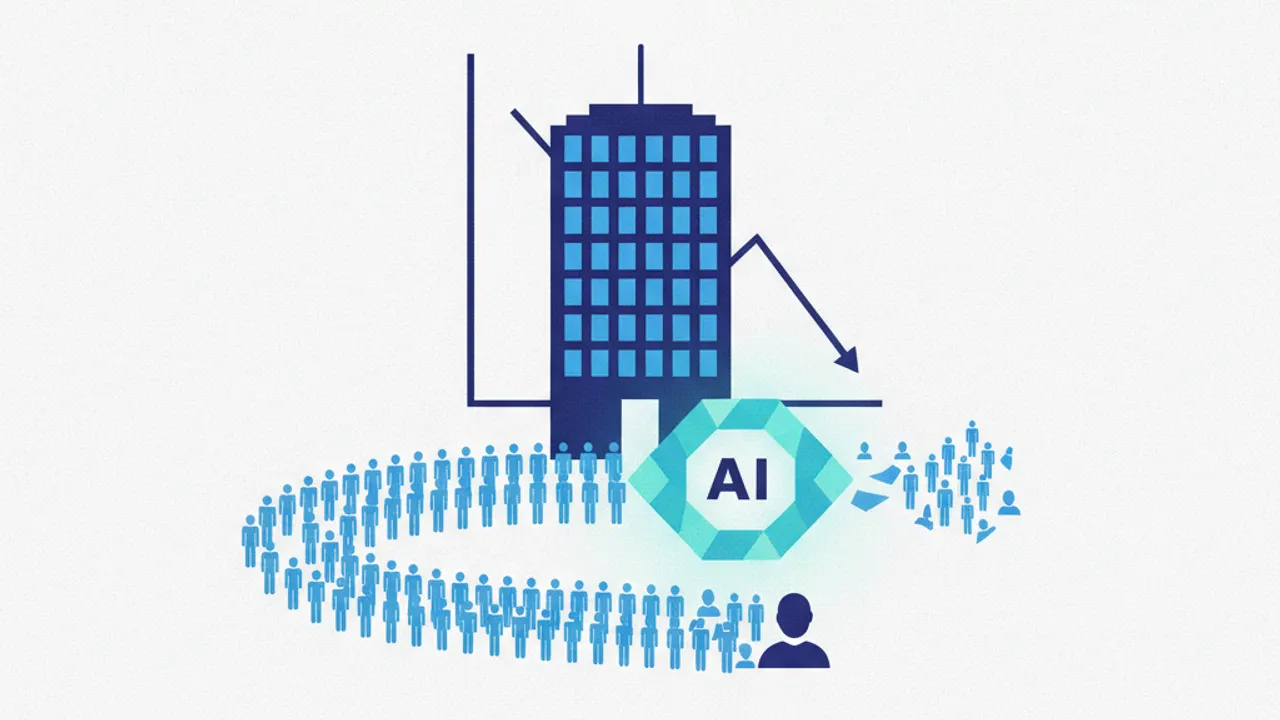
On September 3, 2026, German digital association Bitkom published its annual study on the IT labor market, reporting that approximately 79,000 positions remain vacant across the country. This figure represents a near-halving from 2023, when open posts stood at 149,000, continuing the downward trajectory from 109,000 vacancies recorded in 2025. The association attributes this shift to a combination of overall macroeconomic cooling and measurable efficiency gains enabled by artificial intelligence.
Practical adoption of generative software tools has expanded across corporate environments. According to the survey, 42 percent of IT departments in German enterprises already deploy generative AI and automated coding assistants in live production. Bitkom President Ralf Wintergerst highlighted that these tools provide significant relief for development teams by handling repetitive programming tasks and boilerplate generation, allowing existing staff to handle larger workloads.
The findings also reveal a fundamental shift in hiring requirements across the industry. Half of the surveyed companies no longer search for pure, standalone AI specialists. Instead, employers increasingly expect traditional software engineers and business process developers to use AI assistants naturally within their standard workflows, effectively turning tool-assisted programming into a baseline qualification.
However, the drop in overall vacancies masks a persistent structural imbalance in technical leadership. A substantial 78 percent of surveyed enterprises report ongoing shortages when recruiting highly qualified senior engineers and software architects. While routine code generation is increasingly handed off to algorithms, high-level system architecture, cross-platform security, and complex integration still demand extensive human experience.
The survey demonstrates that corporate IT strategies are pivoting away from aggressive head-count expansion toward productivity enhancement through tooling. Organizations face the necessity of upskilling their current technical workforce to leverage automated agents efficiently. As baseline programming needs stabilize, competition remains fierce for the senior specialists required to supervise and architect these modern systems.