
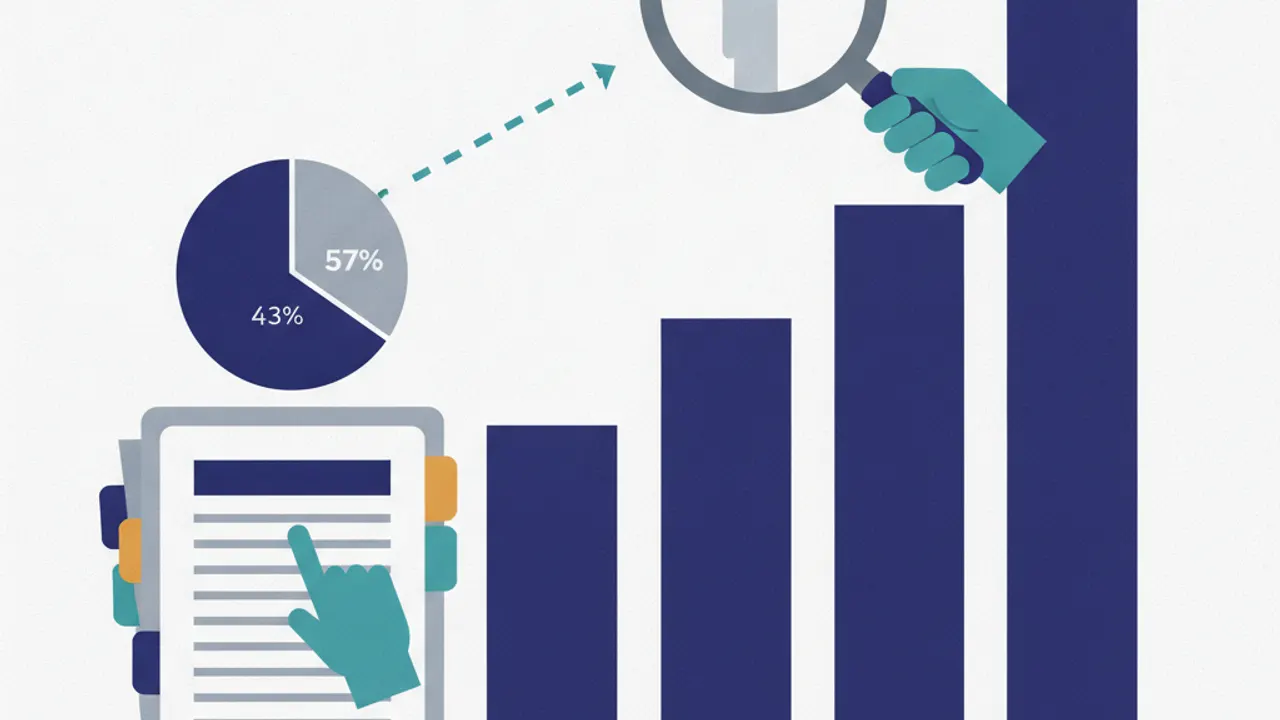
Artificial intelligence has reached mainstream adoption across the German corporate sector. According to a representative survey of 603 companies with 20 or more employees conducted by the digital association Bitkom, 57 percent of businesses currently deploy AI. This represents a substantial rise from 36 percent in 2025 and 20 percent in 2024. Another 38 percent are planning or examining its implementation, leaving only 4 percent of enterprises regarding artificial intelligence as completely irrelevant to their business.
The technological footprint is expanding into deeper operational layers. While external customer contact (72 percent) and marketing (54 percent) remain the dominant areas, internal core functions are experiencing significant growth. Knowledge management systems doubled their adoption rate year-over-year to 22 percent, while controlling and accounting reached 25 percent. In industrial manufacturing, 22 percent of facilities now utilize AI processes. Furthermore, 11 percent of companies report active deployment of autonomous AI agents, with an additional 29 percent planning to implement them.
However, a significant gap remains between technological adoption and real value creation. Not a single surveyed business claims to fully exploit the technology's full potential, with 59 percent assessing their current level of exploitation as insufficient or low. Despite these operational friction points, positive economic outcomes are emerging: 66 percent of active adopters report a strengthened market position, 48 percent record measurably accelerated processes, and 45 percent cite a direct contribution to overall business success.
To sustain this momentum, 45 percent of organizations are increasing their AI budgets in 2026, while the remaining half keeps spending levels steady. Major investment drivers include cloud infrastructure, computing capacity, data preparation, and legacy interface integration. At the same time, human capital constraints persist, as 66 percent of companies rate the AI skills of their workforce as low. In response, 70 percent of businesses have launched dedicated internal training initiatives.
Regulatory compliance under the European Union's framework poses a major hurdle for enterprise leadership. Exactly 37 percent of companies identify as directly affected by the EU AI Act, while 34 percent are still reviewing their status. Among affected firms, 89 percent anticipate a very high implementation burden. Looking at the wider economy, skepticism dominates: 66 percent of all surveyed enterprises view the new regulatory framework as presenting more competitive disadvantages than benefits.