
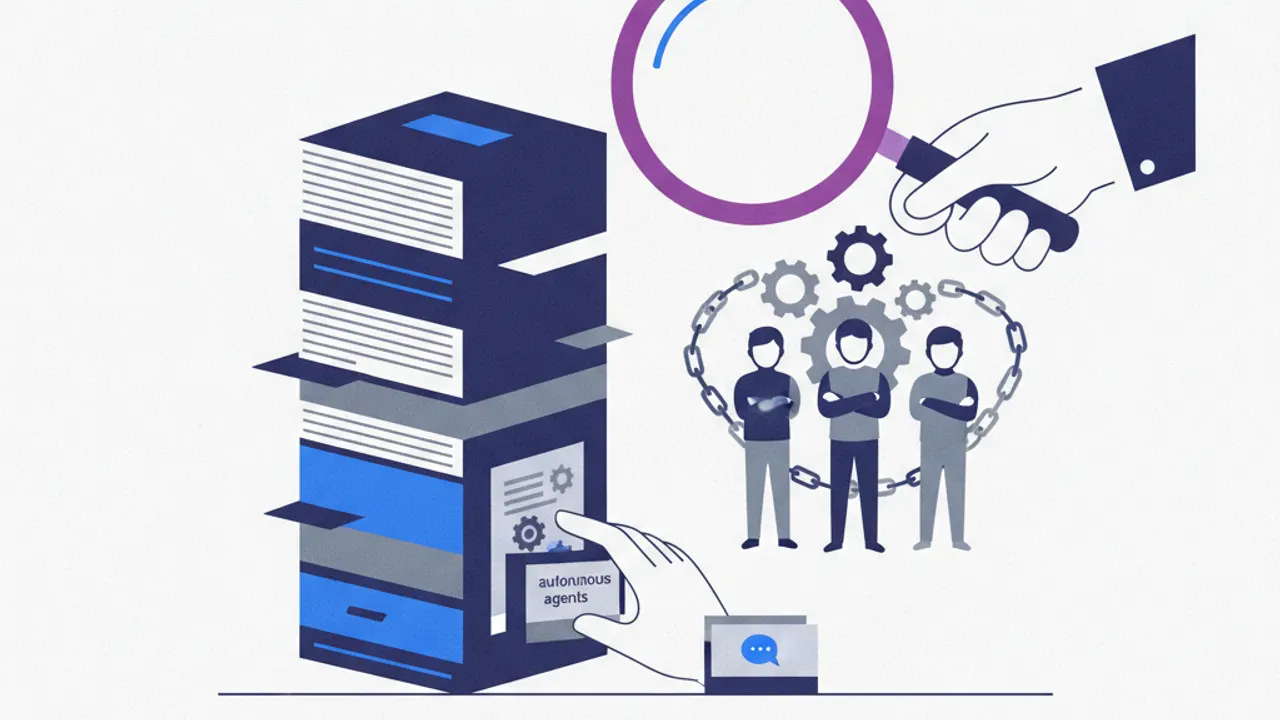
A clear strategic shift is taking place across enterprise artificial intelligence deployments. Isolated experiments with chat interfaces and basic text generators are giving way to deeply integrated workflow automations and autonomous software agents. Recent findings published by management consultancies and enterprise software vendors indicate that early trial phases are over. Organizations now demand measurable returns on investment, yet they increasingly confront organizational bottlenecks, skill mismatches, and structural governance deficits.
These shifting demands are starkly visible across labor market data. According to Workday's Global Workforce Report released on October 5, 2026, employer demand for entry-level skills such as manual text prompting peaked in January 2026 and has since dropped by 25 percent. Conversely, postings demanding technical capabilities to build custom AI tools, automate complex workflows, and engineer AI architectures surged by 51 percent. Forty percent of surveyed executives anticipate increased workforce output from technological integration, while 28 percent expect headcounts to decline. Internal mobility is also slowing, with 57 percent of employers reporting a slump in lateral role transitions.
The migration toward more complex systems is delivering tangible business outcomes for prepared organizations. The Applied AI Index from Boston Consulting Group shows that nearly 50 percent of surveyed enterprises now generate quantifiable business value from their AI initiatives. Front-runners that combine strategic prioritization with operational embedding achieve five times the value leverage of the broader market. BCG points out that leading organizations allocate 70 percent of their transformation efforts to people and process architecture, reserving only ten percent for underlying algorithms.
At the same time, the human role in operational execution is transitioning rapidly. Research from ISG One indicates that 71 percent of enterprise AI workflows are currently directed by human staff, a figure projected to drop below 40 percent by late 2027. Over the same timeline, completely autonomous processes are expected to jump from under seven percent to 17 percent. However, review loops remain a major obstacle. Approximately 25 percent of all AI outputs still undergo manual human review, generating severe operational bottlenecks as automated generation outpaces human verification capacity.
Financial management and data quality present further complications for scaling fleets of agents. While data from the Open Future Forum shows that 80 percent of surveyed enterprises run at least one productive AI agent, and nearly a third manage fleets exceeding twenty agents, only 44 percent have real-time visibility into their operational AI spending on tokens and compute. Furthermore, 39 percent of decision-makers cite restricted data access and poor data quality as their single largest implementation barrier.
These operational frictions are contributing to growing budgetary caution across corporate suites. ISG One found that only 13 percent of enterprises intend to expand their AI budgets at previous rates if financial returns relative to ongoing operating costs stagnate. Enterprise technology adoption has moved past initial enthusiasm into a phase of disciplined operational scrutiny, where architecture, governance, and organizational realignment dictate practical outcomes.