
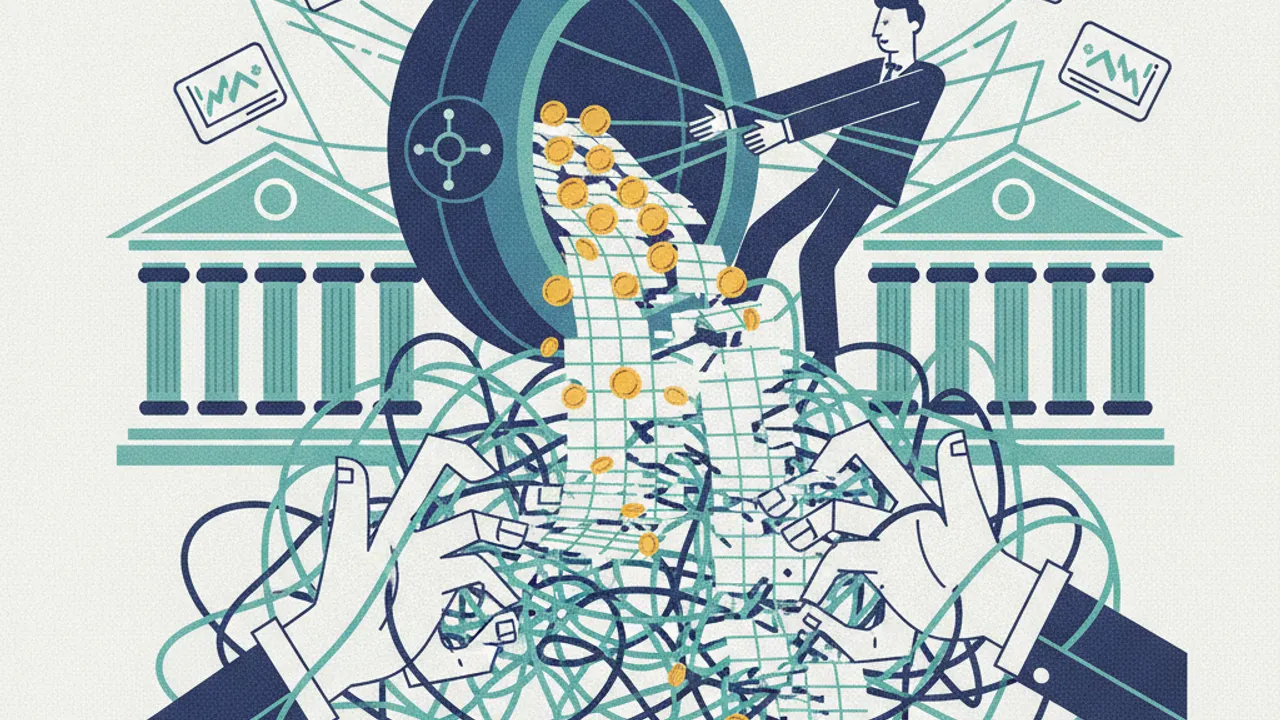
A viral report from an enterprise senior software engineer, quoted under the name voxium on Simon Willison's weblog, provides a sobering look into the realities of corporate software development. According to the account published on September 20, 2026, entire engineering workflows ranging from technical specifications and product requirement documents to Jira tickets and code are now generated end-to-end by Claude Code. While executive management celebrates this shift as an unprecedented productivity breakthrough, it has turned into an operational bottleneck for the engineering workforce. Rather than reducing working hours, deep automation has dramatically distorted the role of human professionals across the software lifecycle.
Instead of architecting systems and writing clean implementations, developers reportedly spend 12 to 13-hour days merely rubber-stamping machine-generated proposals. In practice, daily engineering work often degrades into repeatedly pressing enter to shepherd automated suggestions and pull requests through enterprise continuous integration pipelines. Because autonomous coding agents produce complex artifacts at speeds that far exceed human cognitive bandwidth, engineers face an unrelenting barrage of pull requests. As a result, technical staff find themselves in a state of chronic exhaustion, unable to exercise meaningful oversight over the code entering the repository.
The root cause of this operational friction lies in a widespread management misperception regarding the nature of software engineering. Because corporate leadership no longer perceives code creation as a project bottleneck, managers demand compressed delivery timelines and expect teams to process an exponential volume of automated tickets. While the marginal cost of generating synthetic boilerplate has collapsed toward zero, the cost and cognitive effort required for rigorous architecture and security reviews remain strictly human. This imbalance reduces experienced engineers to passive reviewers who lack the necessary time to scrutinize structural integrity.
The resulting review fatigue introduces severe enterprise governance vulnerabilities and threatens long-term software maintainability. When developers are forced to approve hundreds of lines of synthetic logic under intense schedule pressure, diligence inevitably collapses. Subtle architectural flaws, brittle edge cases, and critical security bugs can easily slip into production deployments without being understood. The report explicitly warns of a creeping loss of control, as no single developer retains a comprehensive mental model of the interconnected codebases generated entirely by autonomous systems.
Alongside organizational strain, the rise of autonomous coding agents also accelerates technical security vulnerabilities across remote development environments. Addressing one of these immediate operational risks, developer Simon Willison released the open-source utility llm-keys-ui 0.1 on PyPI and GitHub on September 20, 2026. The user interface plugin facilitates the secure provisioning and automated rotation of API credentials on remote development instances, such as Codex Remote. By decoupling key management from agent sessions, the tool prevents sensitive API keys from being pasted directly into prompt windows or ingested by language model context buffers.
These developments demonstrate that unchecked adoption of generative coding agents without corresponding governance frameworks risks impairing rather than elevating enterprise software delivery. As long as corporate metrics reward raw volume of generated code rather than verified system stability, organizations risk burning out key personnel while degrading systemic quality. Engineering leadership must establish strict boundaries, mandate manageable review loads, and institutionalize credential protections for agentic workflows. Only when automated generation is matched by realistic human review capacity can enterprises realize the benefits of agentic programming without surrendering architectural control.