
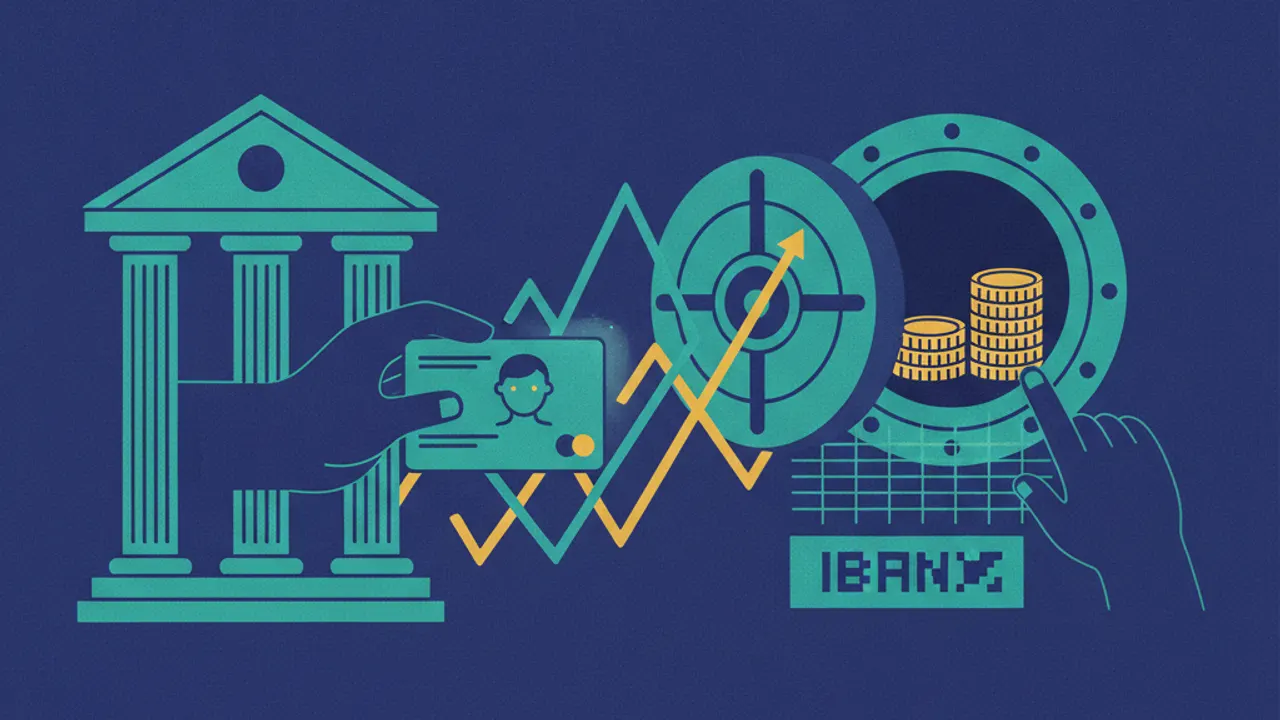
London-based financial technology firm Wirex officially introduced its new AI agent, Navoka, during the Full Stack London conference. The software represents a notable operational shift within automated banking services. Traditional digital assistants in the sector were previously confined to drafting transactions, or they required full administrative access to a user's primary bank account. Navoka diverges from this convention by establishing an independent virtual identity.
According to Wirex, the agent is provisioned with its own distinct IBAN, an attached debit card, and native wallets for the stablecoins USDC and EURC. This structural separation allows users to allocate dedicated operational funds rather than exposing root banking credentials. Consequently, transactional workflows operate in isolation, which substantially mitigates financial exposure arising from software malfunction or unauthorized tampering.
From a regulatory perspective, this architecture adheres directly to the principle of least privilege mandated by financial supervisory bodies. The autonomous agent executes transfers exclusively within rigid, unalterable budget boundaries and whitelisted merchant parameters. Should the system trigger unexpected actions, the primary capital on the customer's core bank accounts remains entirely protected. Wirex directly tackles one of the foundational compliance barriers facing agent deployment in banking.
Key operational use cases for Navoka encompass regular invoice settlements, recurrent software subscriptions, and structured vendor payments. Both corporate teams and individual consumers can delegate routine transaction flows to the agent, which resolves them without demanding per-transaction authorization. By integrating traditional fiat channels alongside regulated stablecoins, the system seamlessly interfaces across legacy banking rails and modern payment networks.
The unveiling at Full Stack London attracted considerable interest across the fintech ecosystem, as autonomous agents have historically lacked dedicated transactional credentials. Prior implementations frequently stalled against strict liability frameworks and institutional risk policies. With Navoka, financial institutions now have a concrete blueprint for embedding agentic systems into day-to-day payments via financial compartmentalization and hard liquidity limits.