
Skip to content
AI ConnectPowered by VELENTIS
AI-generated1 min

Spend Data Reveals Demand Plateau for Anthropic's Flagship Claude Fable 5

Corporate spend analysis shows Anthropic's top model Claude Fable 5 accounts for only 11 percent of tool revenue as engineering teams pivot to cheaper multi-tier coding workflows.

This article was AI-generated and published automatically. Context, labelling and all sources at the end of the article.

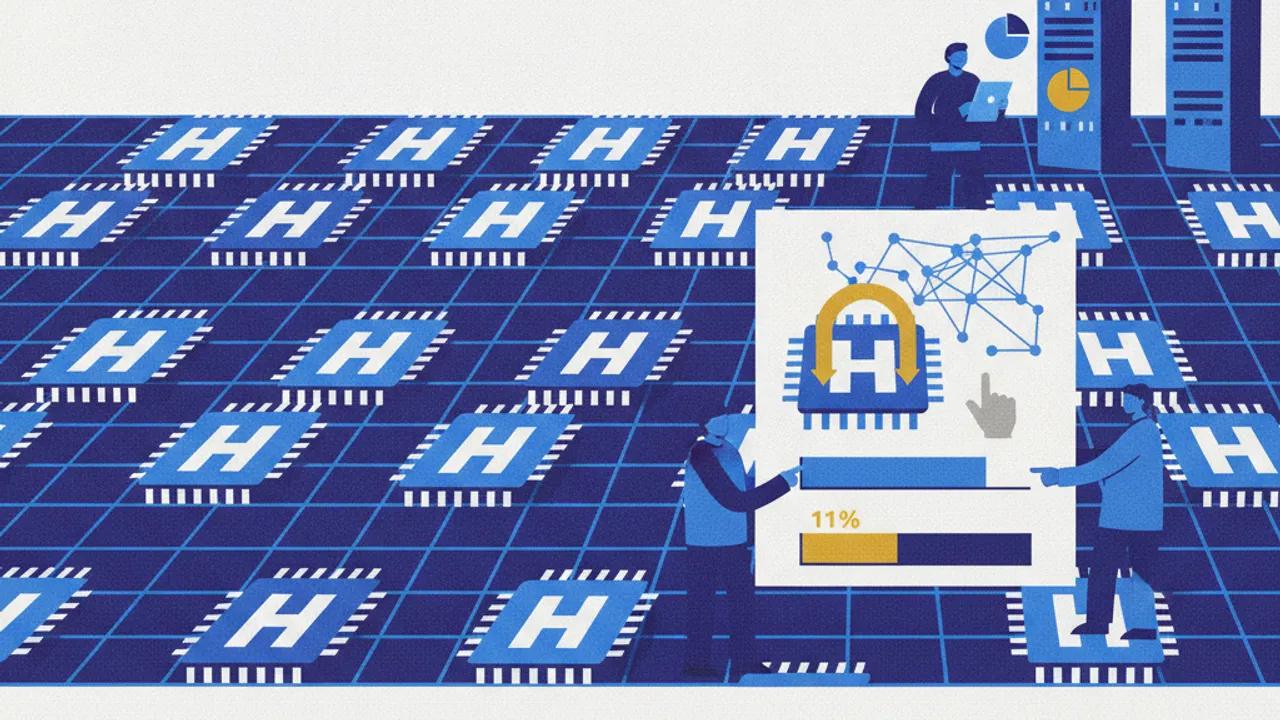
(KI-generiertes Symbolbild: Gemini / AI Connect)

A notable economic shift is reshaping the commercial deployment of frontier artificial intelligence models. An analysis of corporate spend data conducted by financial platform Ramp for the Financial Times reveals that Anthropic's flagship model, Claude Fable 5, generates only about 11 percent of total revenue from Anthropic tools. Although the model represents the publicly accessible, secured version of the Mythos architecture and achieves top benchmark scores, its market share within enterprise budgets remains surprisingly limited.

Industry analysts, including Drew Breunig, and software engineers describe this trend as a turning point in model economics. The era of indiscriminately utilizing the most expensive frontier model for all stages of software engineering is giving way to strict cost optimization. Rather than routing every prompt through top-tier systems, enterprise development teams are adopting structured, two-tier workflows to manage inference budgets.

In these multi-tier architectures, expensive frontier models like Fable 5 are used selectively for high-level architectural design, system blueprints, and scaffolding. Their reasoning capabilities are deployed to establish component boundaries, safety constraints, and overall design patterns. Once this foundational framework is created, secondary systems take over implementation.

The routine generation of code and iterative execution tasks are increasingly delegated to significantly cheaper models. Development teams are relying on cost-effective alternatives such as Kimi K3, GLM 5.2, and GLM 5.3, alongside intermediary options like Sonnet or Opus 4.8. This strategy drastically reduces operational token expenses without compromising the structural integrity of the resulting software.

For AI model providers, this structural shift presents a clear commercial challenge. Superior performance on technical benchmarks is no longer enough to command premium token prices across widespread workloads. The rapid adoption of modular routing and multi-tier agent workflows requires vendors to optimize their product suites for granular cost tiers and specialized pipeline roles.

What this means for you

For engineering leaders and technical teams, this development signals the end of single-model reliance for complex software tasks. Substantial cost reductions can be achieved by utilizing top-tier frontier models strictly for architectural planning while delegating execution to lower-cost specialized alternatives.

Perspectives

Coverage: 3× Other

One story, several angles: how each source frames the topic, each with a verbatim quote.

  • dealroom.coOther

    Dealroom emphasizes that the weak adoption of Fable 5 challenges the assumption that capability leadership automatically monetizes, as customers increasingly route routine tasks to cheaper models.

    Original quote

    Corporate spending on Anthropic’s flagship Fable 5 has plateaued at about 11% of spend on its tools

    dealroom.co
  • gigazine.netOther

    GIGAZINE focuses on Ramp spending data showing that stagnant corporate spending on Claude Fable 5 could disrupt the business model of frontier AI development as businesses opt for cheaper models.

    Original quote

    corporate spending on Claude Fable 5 has stagnated and is not increasing significantly.

    gigazine.net

Source classification is maintained editorially (political spectrum only where consensus is broad; vendor communication is PR, not journalism). Unlabelled sources are unclassified: we do not guess.

Evidence

Solidly sourced
69/100
  • Ramp corporate spend data analyzed for the Financial Times shows that Claude Fable 5 accounts for only about 11 percent of revenue from Anthropic tools.

    verified
  • Claude Fable 5 serves as the publicly accessible and secured version of Anthropic's Mythos architecture.

    single source
  • Engineering teams are adopting two-tier workflows that reserve expensive frontier models for architecture and scaffolding decisions.

    single source

The evidence score is computed, not hand-set: from confidence, the number of sources and the share of verified statements.

Source & transparency

As of: August 25, 2026

AI-generatedAI-generated: produced automatically from vetted sources with technical quality checks (source, quote and figure verification); no human sign-off of each item before publication

Sources
3
Verified statements
1 / 3
Evidence score
69Solidly sourced

Want to put this into practice?

We connect you with suitable AI providers from the DACH region, free of charge and without obligation.

What's next?