
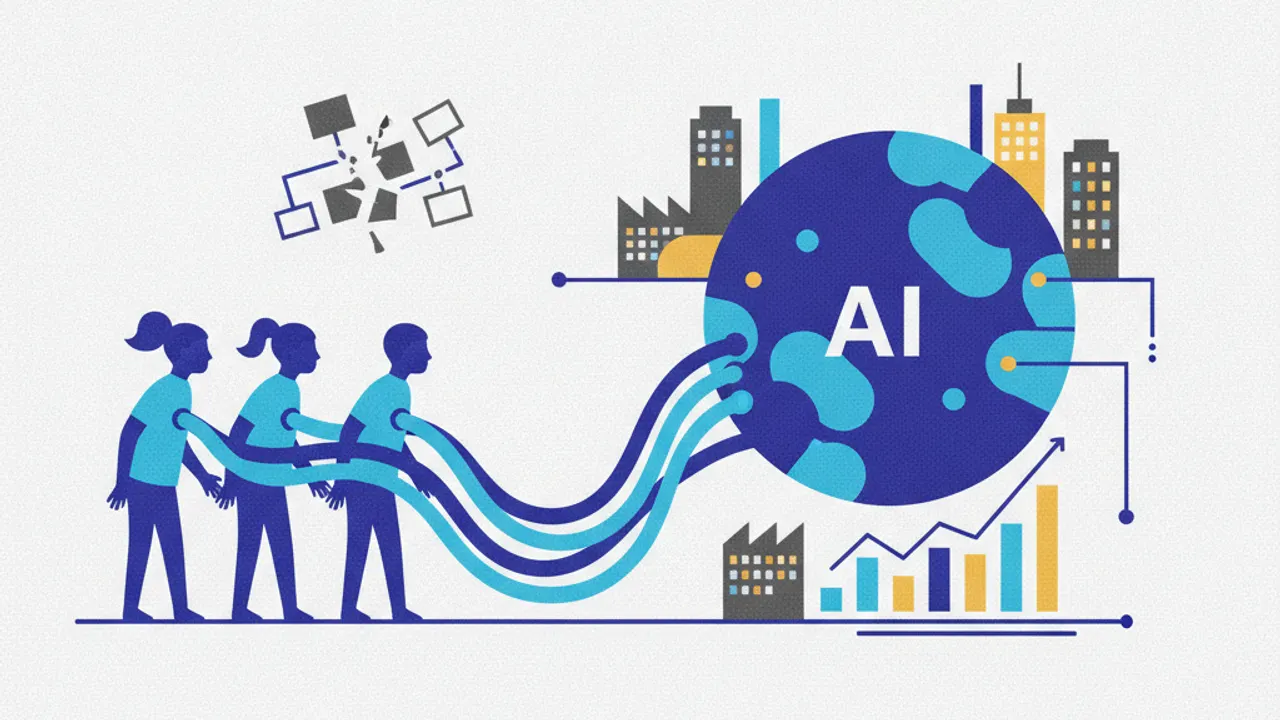
The rapid integration of artificial intelligence into office workflows is reshaping the labor landscape and creating clear generational divisions. According to findings from the Randstad Workmonitor 2026 released on September 3, 2026, 27 percent of German Generation Z workers state that they can no longer handle their daily jobs without AI tools. Among Millennials, this figure stands at 22 percent, whereas only 16 percent of Generation X and ten percent of Baby Boomers report a direct operational dependence on software assistants.
Across all age groups, 19 percent of German employees describe themselves as reliant on AI systems. Despite these figures, Germany still trails several European peers in overall workforce adoption. In Switzerland, 40 percent of workers report having AI deeply integrated into their daily routines. In Luxembourg, the rate reaches 41 percent, and in Norway it sits at 31 percent, highlighting notable differences in technology adoption across European economies.
At the same time, entry-level workers are facing growing structural headwinds, according to a global macroeconomic study by Goldman Sachs published in early September 2026. The findings show that industries with high exposure to AI have experienced significantly slower employment growth compared to historical trends since mid-2022. The trend is most pronounced in information and communications technology, customer support centers, and standardized financial services.
The decline in traditional entry-level positions is driven by workflow and coding agents taking over routine assignments. Tasks such as preparing basic source code, writing first drafts, producing documentation, and cleaning data pipelines are increasingly handled by automated tools. In Germany, this is creating a stark divergence: While companies actively recruit senior AI specialists and systems architects, job openings for conventional junior profiles are noticeably shrinking.
This dynamic creates a dilemma between immediate efficiency gains and sustainable talent development. If young professionals no longer perform routine analytical tasks themselves, they may struggle to build the deeper foundational knowledge required to manage complex systems later in their careers. Meanwhile, the reliance of younger staff on automated assistants requires organizations to rethink how they supervise, verify, and train their workforce.
Human resource specialists warn that simply cutting junior roles creates long-term operational vulnerabilities. Companies must redesign apprentice programs to teach graduates how to orchestrate and audit autonomous agents effectively. The goal must be to ensure that the next generation of professionals retains the critical domain expertise needed to evaluate algorithmic outputs rather than accepting machine recommendations at face value.