
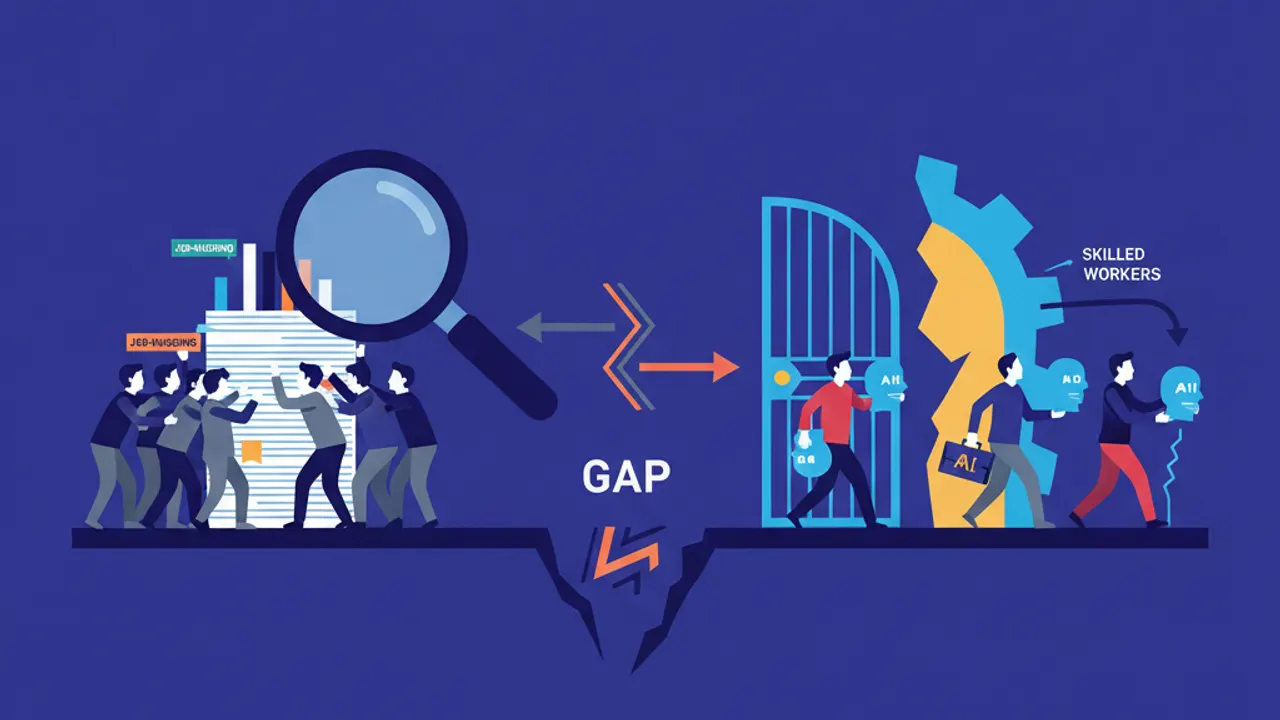
The rapid arrival of autonomous software systems is transforming white-collar workplaces. Recent market surveys published around 1 October 2026 illustrate a workforce caught between technological acceleration and deep professional unease. As autonomous agents that carry out multi-step task chains independently become commonplace in daily business, employees are responding with divergent career strategies.
The HP Work Relationship Index 2026 details the widespread adoption of this technology. According to the study, 45 percent of surveyed desk workers in Germany now deploy autonomous AI agents in their daily routines. Adoption rates are even higher among organizational leaders: 64 percent of IT executives and 63 percent of general management report active use of agentic tools. Employers have adjusted their IT strategies accordingly, with the formal rollout of official AI tools rising from 32 percent to 49 percent over the past twelve months.
Despite this routine exposure, defensive behavior remains prevalent across the broader labor force. Approximately 60 percent of surveyed staff actively hold on to their current positions, avoiding external career moves. This dynamic, known as job hugging, is driven by the perception that changing employers during an industry-wide transition carries excessive risk. Younger demographics are taking independent precautions: 32 percent of Generation Z respondents have established secondary income streams to buffer against potential technology-driven employment disruption.
At the same time, organizations that move slowly on AI infrastructure face the departure of their most skilled digital talent. A concurrent labor market study by PwC highlights high turnover intent among experienced practitioners. It found that 29 percent of advanced AI pioneers actively consider switching employers if their current organization lags in deploying modern AI software and automated workflows. Workers who have mastered these systems expect tools that match their capabilities.
This mobility is accompanied by declining confidence in traditional skill sets. According to PwC, only 27 percent of workers remain confident that their present core qualifications will retain equivalent market value in three years without active AI training. The perceived shelf life of conventional expertise is falling, placing acute pressure on employees to independently acquire practical tool proficiency.
These findings present a complex operational challenge for enterprise leadership and human resources teams. Management must actively alleviate workforce anxiety through structured reskilling programs to prevent operational paralysis. Concurrently, leadership must accelerate the deployment of autonomous systems into core operations to prevent top technical performers from migrating to more innovative competitors.