
On November 9, 2026, Anthropic officially introduced its latest frontier model generation, comprising Claude Fable 5.2 and its companion model Mythos 5.2. The company followed up on November 17, 2026, with detailed scientific documentation outlining the architectural and operational capabilities of the new systems. The release marks Anthropic's strategic shift toward specialized flagship models tailored for complex technical execution and rigorous reasoning. Both models were engineered to handle demanding technical workflows and sustained autonomous processes that exceed the scope of conventional conversational systems.
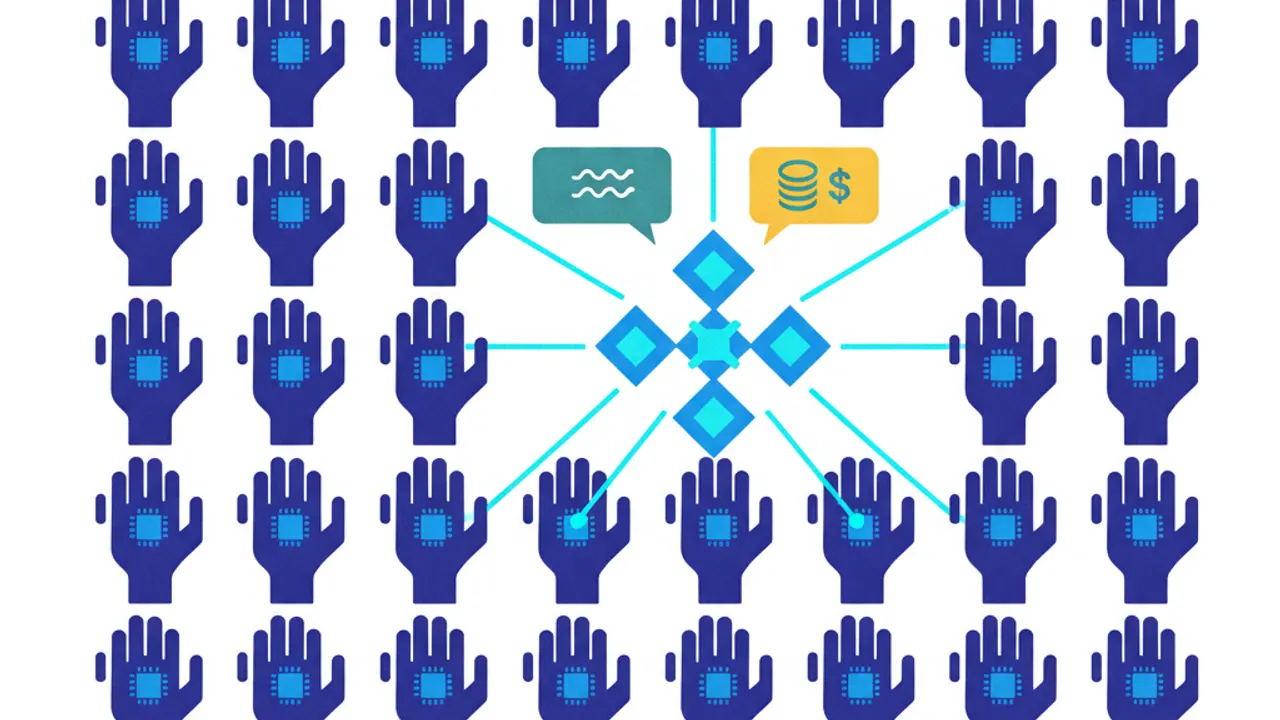
The central architectural highlight of Claude Fable 5.2 is its capability for extended long-term reasoning and the orchestration of complex agent networks. According to Anthropic's model documentation, the system is designed to coordinate hundreds of subagents simultaneously, synchronizing their intermediate outputs within complex task hierarchies. This coordination enables users to decompose multifaceted technical challenges into modular assignments executed in parallel by dedicated instances. By structuring tasks through multi-agent orchestration, the architecture prevents context drift during prolonged computational workflows.
Anthropic also highlighted significant scientific milestones achieved by the model prior to its public rollout. The company documented that Fable 5.2 solved two previously unresolved problems in the theoretical physics of black holes within the context of quantum gravity. Furthermore, the model completed the formal verification of Fermat's Last Theorem, translating the mathematical proof into machine-readable code. The system accomplished this formal verification within a span of just 30 hours, demonstrating its capability in abstract mathematical logic.
Beyond pure reasoning benchmarks, Anthropic introduced meaningful optimizations to operational costs and generation throughput. Inference costs decreased by 20 percent compared to Claude 5.1, bringing pricing down to 8 dollars per one million input tokens and 40 dollars per one million output tokens. At the same time, standard token output speed improved by 30 percent across deployments. For latency-sensitive production environments, Anthropic also implemented an optional Fast Mode capable of delivering up to 2.5 times the standard output velocity.
Alongside the primary model, Anthropic unveiled Mythos 5.2 as a specialized security-focused variant. While structurally identical to Fable 5.2, Mythos is configured with extended permissions and system privileges tailored for controlled environments. Access to Mythos 5.2 is strictly restricted to certified research institutions working in the sensitive domains of biomedicine and cybersecurity. This tiered release strategy allows Anthropic to grant high-privilege access for safety-critical scientific inquiry while mitigating risks associated with general distribution.
With the dual release of Claude Fable 5.2 and Mythos 5.2, Anthropic intensifies competition at the frontier of autonomous agent deployment. The combination of reduced token pricing, accelerated generation rates, and extensive agent orchestration lowers the technical and economic barriers for high-throughput enterprise pipelines. While Fable 5.2 serves as the primary engine for large-scale production environments, the specialized Mythos 5.2 framework highlights how model providers are managing regulatory and safety constraints in highly sensitive technical domains.