
Skip to content
AI ConnectPowered by VELENTIS
AI-generated2 min

Anthropic Plans IPO: JPMorgan and Goldman Sachs Lead Syndicate with High Retail Allocation

Ahead of its planned Nasdaq listing, Anthropic is reserving up to 20 percent of shares for retail investors. JPMorgan and Goldman Sachs lead the syndicate amid regulatory scrutiny.

This article was AI-generated and published automatically. Context, labelling and all sources at the end of the article.

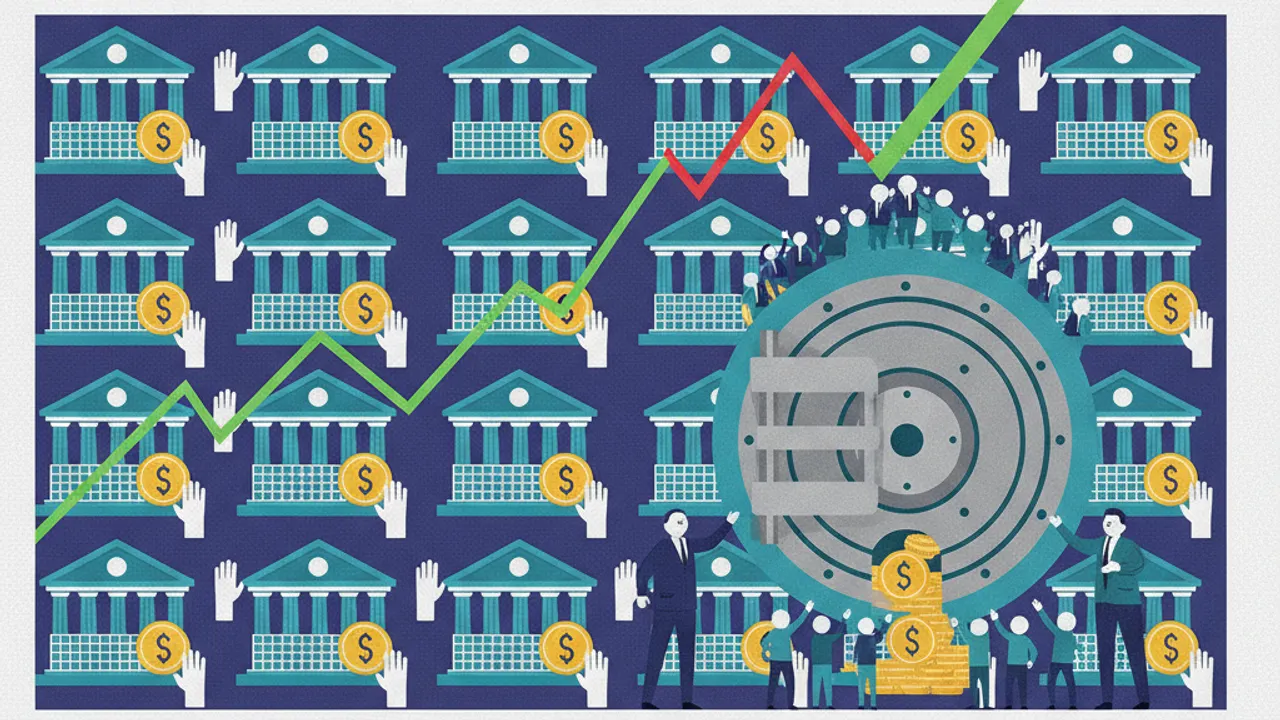
(KI-generiertes Symbolbild: Gemini / AI Connect)

AI developer Anthropic is moving ahead with its initial public offering on the Nasdaq under the ticker symbol ANT. Following the submission of its S-1 registration statement, the banking syndicate for the landmark transaction has taken clear shape: Goldman Sachs will serve as the lead left underwriter, while Morgan Stanley has been appointed as the stabilization manager. The transaction represents another milestone in the capitalization of foundation model developers.

A major feature of the planned listing is its unusually large allocation for private individuals. Anthropic has mandated Wall Street bank JPMorgan Chase to lead the placement of shares to retail investors in the United States. Meanwhile, Citigroup has been selected to coordinate the international retail tranche, which includes investors across the United Kingdom, Switzerland, Japan, and the European Economic Area. Anthropic plans to reserve between 15 and 20 percent of the total offering volume specifically for retail buyers.

This distribution model mirrors the approach JPMorgan deployed during the 86.2 billion dollar IPO of SpaceX in June. The importance of the retail component is further underscored by executive involvement, as JPMorgan Chief Executive Jamie Dimon plans to participate personally in the marketing campaign for retail investors. Historically, individual traders participating in major tech listings have faced significant hurdles, often forced to buy shares on secondary markets at elevated opening prices.

However, the aggressive push toward non-institutional investors has quickly attracted political pushback in Washington. US Senator Elizabeth Warren sent a formal inquiry to the underwriting banks and the Securities and Exchange Commission, raising concerns about systemic exposure. Warren pointed directly to the risk disclosures detailed in Anthropic's S-1 filing, warning of unresolved questions regarding operational margins and market dependencies.

Financial figures from the filing illustrate the relentless capital demands of frontier artificial intelligence: Anthropic reported 16.3 billion dollars in revenue for the first half of the year, but also disclosed massive net losses driven primarily by spiraling data center and compute expenses. Margin pressures across compute infrastructure are already forcing strategic shifts across the industry: rival OpenAI is concurrently exploring the large-scale adoption of Google's custom Tensor Processing Units (TPUs) to curb its reliance on Nvidia's dominant ecosystem.

At the same time, the public listing underscores mounting demands from venture capital and debt providers for clearer paths to profitability. Financiers are increasingly urging artificial intelligence leaders to pursue multi-cloud architectures rather than relying entirely on single-vendor stacks. With hyperscalers like Alphabet raising their 2026 capital expenditure guidance up to 205 billion dollars, individual retail investors will soon face the direct volatility and capital intensity of the generative AI boom.

What this means for you

The planned public listing marks the transition of generative AI from private venture backing to the broader public market. While the high retail allocation offers individual investors rare early access to a foundation model pioneer, the company's steep data center losses and uncertain profitability carry significant financial risks.

Perspectives

Coverage: 3× Other

One story, several angles: how each source frames the topic, each with a verbatim quote.

  • advisorhub.comOther

    AdvisorHub focuses on Goldman Sachs and Morgan Stanley securing the top underwriting roles in the syndicate for Anthropic's upcoming public offering.

    Original quote

    „Goldman Sachs Group Inc. and Morgan Stanley scored the top roles on Anthropic PBC’s upcoming initial public offering“

    advisorhub.com
  • zerohedge.comOther

    ZeroHedge highlights JPMorgan being enlisted to market the IPO to retail investors despite Anthropic facing massive financial commitments and existential risk disclosures.

    Original quote

    „Anthropic has tapped JPMorgan to lead the U.S. retail portion of its IPO“

    zerohedge.com

Source classification is maintained editorially (political spectrum only where consensus is broad; vendor communication is PR, not journalism). Unlabelled sources are unclassified: we do not guess.

Evidence

Solidly sourced
62/100
  • Anthropic PBC mandated JPMorgan Chase to lead the US retail offering for its planned Nasdaq IPO, while Citigroup manages the international retail tranche.

    single source
  • Anthropic plans to reserve 15 to 20 percent of the offering volume for retail investors, mirroring the structure used in SpaceX's 86.2 billion dollar IPO in June.

    single source
  • Goldman Sachs serves as lead left underwriter, with Morgan Stanley acting as stabilization manager.

    single source
  • Senator Elizabeth Warren questioned the syndicate and the SEC following Anthropic's S-1 filing, which reported 16.3 billion dollars in first-half revenue alongside steep net losses.

    single source

The evidence score is computed, not hand-set: from confidence, the number of sources and the share of verified statements.

Source & transparency

As of: October 30, 2026

AI-generatedAI-generated: produced automatically from vetted sources with technical quality checks (source, quote and figure verification); no human sign-off of each item before publication

Sources
3
Verified statements
0 / 4
Evidence score
62Solidly sourced

Want to put this into practice?

We connect you with suitable AI providers from the DACH region, free of charge and without obligation.

What's next?