
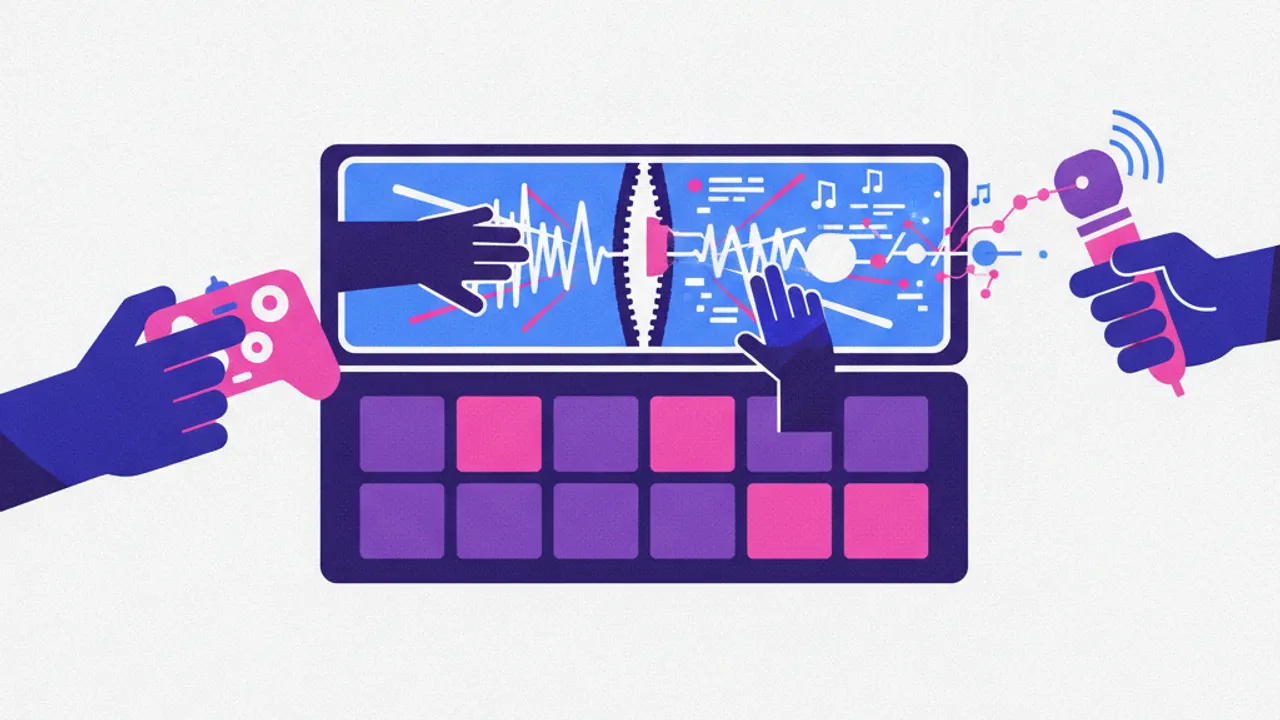
Veteran audio hardware manufacturer Akai Professional is breaking with a decades-old industry dogma. Parent company inMusic has announced that it will release the operating system for its new MPC Sample Key keyboard sampler as open source. The move marks a fundamental turning point for studio hardware, which has historically been delivered almost exclusively as locked, proprietary ecosystems. Driving this decision is an accelerating wave of musicians utilizing AI coding agents to reprogram and customize their instruments.
At the heart of this shift lies the practice of vibe coding. Instead of mastering complex programming languages by hand, artists increasingly rely on frontier models and generative coding assistants like Anthropic Claude. By submitting prompts in natural language, users can generate custom synthesizer engines, innovative drum machines, and specialized firmware modifications within minutes. Capabilities once reserved for specialized software engineers are now placed directly into the hands of beatmakers and sound designers, fusing physical hardware with ad hoc software.
Speaking to technology publication The Verge, parent company inMusic officially confirmed its strategic shift. Rather than locking down modified firmware with cryptographic restrictions or voiding warranties, the company plans to deliberately supply hardware to developers and AI modders. Akai is acknowledging that proprietary walled gardens are becoming obsolete in an era of rapid generative code creation. By providing an open foundation, the company aims to turn the MPC platform into the premier hardware canvas for a new generation of tech-savvy creators.
Historically, audio production workstations operated as hermetically sealed black boxes. Manufacturers strictly guarded their internal sound engines and operating systems, leaving musicians dependent on factory features and infrequent official firmware patches. Akai's decision dismantles this rigid framework, transforming physical hardware into a modular vessel for community-driven software. Producers can now prototype new audio effects or sequencing logic during a creative session and map them instantly to physical pads, dials, and keys.
This opening of music hardware aligns with a broader transformation sweeping the software landscape in late 2026. As GitHub executive vice president Jay Parikh highlighted in the recent Octoverse report, autonomous AI agents initiated over 40 percent of all pull requests by September 2026, alongside a dramatic surge in reverse engineering and interoperability projects. Advanced AI models are no longer merely suggesting snippets of syntax, but orchestrating functional systems, a dynamic that is now reaching consumer audio gear and creative electronics.
For the wider music technology sector, Akai's embrace of open-source architectures represents a structural change. When intuitive prompts suffice to reshape hardware behavior on the fly, competing instrument manufacturers will face intense pressure to reconsider closed ecosystems. With the MPC Sample Key, Akai bets that the enduring value of hardware lies in extreme adaptability rather than vendor lock-in. The fusion of tactile control surfaces with agentic code generation may soon define how electronic instruments are built, customized, and played.