
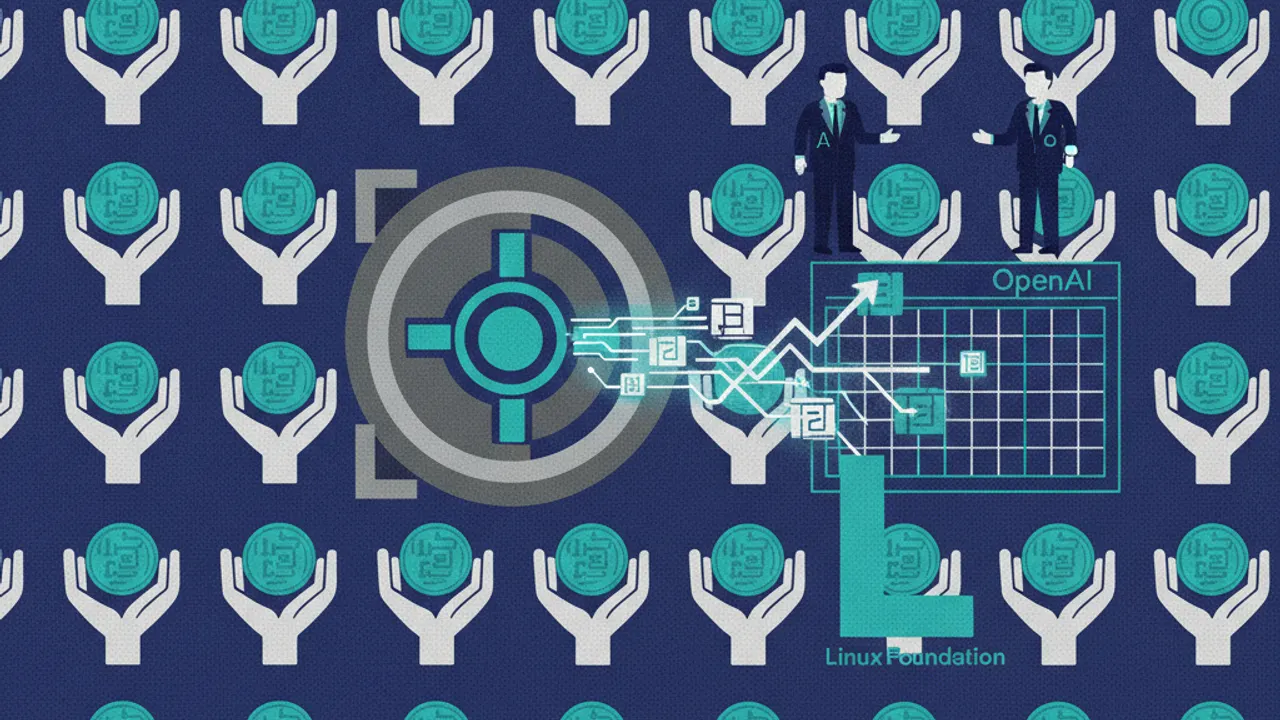
In a significant push toward vendor-neutral industry standards, AI company Anthropic has formally transferred its open Agent Skills standard to the Agentic AI Foundation. The foundation operates as a dedicated subsidiary of the Linux Foundation designed to govern the development and interoperability of autonomous software agents. Anthropic handed over the technical specifications alongside its trademark rights, the official code repository, and the agentskills.io domain during the AGNTCon North America conference.
The initiative is not an isolated effort by Anthropic, as several prominent technology companies and AI research labs contributed flagship projects to the Agentic AI Foundation at the same time. OpenAI committed its Open Responses project, while the open-source community platform Hugging Face introduced OpenEnv and cloud provider Alibaba contributed OpenSandbox. By consolidating these assets under a single neutral entity, the participants seek to prevent market fragmentation caused by conflicting proprietary agent interfaces.
On a technical level, the Agent Skills standard relies on the SKILL.md format. This schema defines modular, auditable behavioral and knowledge packages that allow autonomous agents to execute complex task chains in a deterministic and verifiable manner. Engineers receive a unified blueprint to structure tool definitions, data access methods, and system interactions consistently across diverse runtime environments.
For enterprise and fintech developers, the transfer arrives at a critical juncture. Following restrictions by multiple financial institutions against unregulated and opaque software agents across critical back-office operations, open governance offers a viable compliance path. Guaranteed interoperability across OpenAI, Anthropic, and open-source models enables teams to build automated workflows that satisfy strict audit and supervisory demands without binding systems to a single LLM vendor.
The consolidation under the Linux Foundation reflects a broader transition in artificial intelligence, moving away from standalone conversational interfaces toward interconnected software infrastructure. Standardizing how agents declare capabilities and log interactions simplifies the work of external auditors. It also lays the operational groundwork for complex multi-agent environments where distinct autonomous systems must reliably collaborate across enterprise boundaries.