
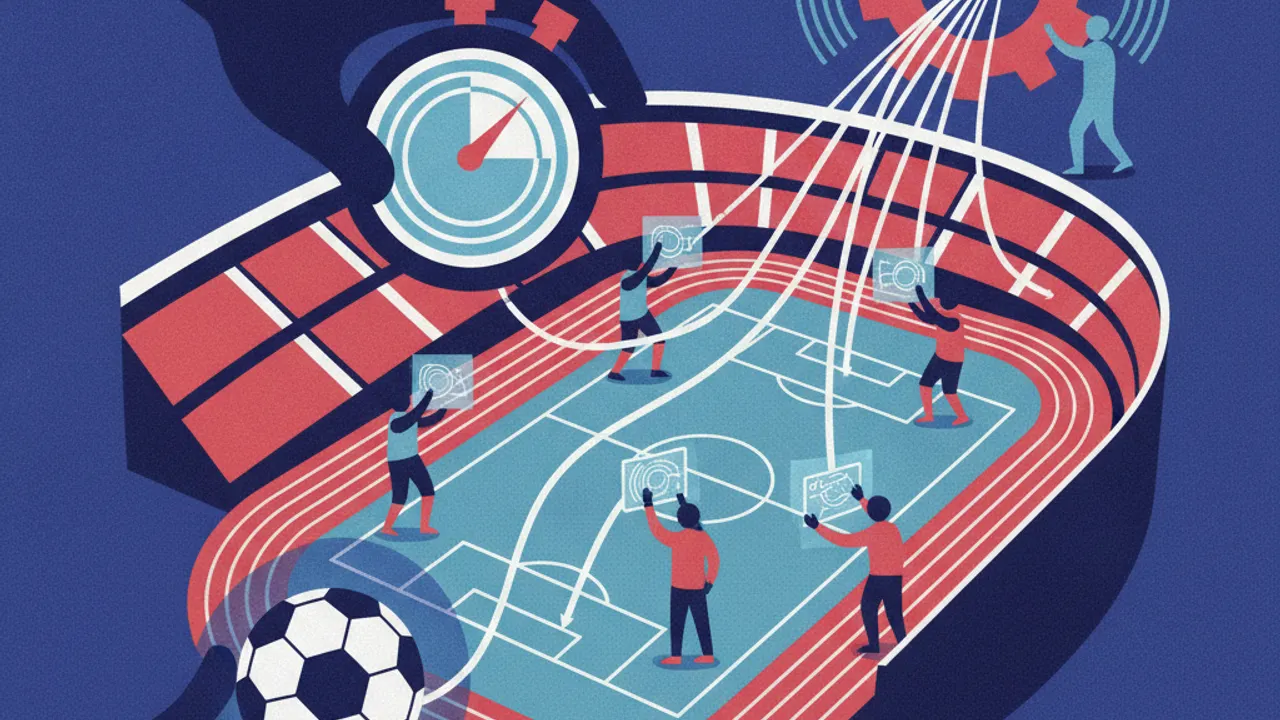
Digital fan engagement in professional sports is entering a new phase defined by autonomous software agents and context-aware interaction models. Within a span of a few days, global technology vendors and major sports franchises announced initiatives designed to restructure how fans experience live games and digital services. From the Web Summit in Lisbon to premier sports leagues in the United States, industry leaders are turning toward real-time platforms. Sports organizations and teams are increasingly seeking ways to translate in-game momentum directly into targeted fan interactions and customized services.
On November 12, 2026, technology corporation IBM honored Swiss-American sports-tech startup LivXP at the Web Summit in Lisbon. LivXP was declared the winner of the year-long IBM Sports Tech Startup Prize Challenge. The decision was made by an expert jury that included Sarah Meron, Chief Communications and Brand Officer at IBM, and Marc Gene, former Formula One driver and ambassador for Scuderia Ferrari HP. The recognition highlights the growing commitment among enterprise tech giants to back specialized applications tailored to sports ecosystems.
At the core of LivXP is an infrastructure powered by agentic AI, engineered specifically for real-time impulse commerce. The software monitors sports events as they unfold, identifying emotional peaks and critical gameplay moments in real time. Based on these dynamic conditions, the platform instantly triggers time-sensitive auctions, exclusive VIP experiences, and digital fan activities. Rather than relying on static promotional formats, the system reacts immediately to the rhythm of the game itself.
Prior to securing the IBM startup prize, LivXP deployed its technology across several live competitive environments. The software has previously been utilized during the Tour de Suisse cycling race and within American college sports. In these operational settings, the platform demonstrated how sports clubs and governing bodies can insert interactive digital touchpoints during high-stakes moments. For organizers, this approach unlocks revenue streams that extend well beyond conventional merchandising formats.
In a parallel development on November 10, 2026, several prominent sports organizations in the United States launched a comparable initiative for continuous fan engagement. The Houston Texans of the National Football League, professional volleyball team LOVB Houston, and Lone Star Sports & Entertainment announced a strategic partnership with commerce platform Bilt. The collaboration centers on the rollout of a unified mobile fan platform. At the heart of the offering is a generative AI system functioning as an AI-powered Fan Concierge.
The concierge service is designed to serve supporters both on game days inside the stadium and across the calendar year. Within the arena, the mobile assistant assists fans with stadium navigation and delivers automated answers regarding ticketing and scheduling. Beyond game days, the generative platform offers personalized recommendations and integrates fans into a local merchant partner network where they can earn rewards. The participating organizations aim to establish an ongoing connection between live sports attendance and year-round digital services.
Together, these developments in Lisbon and Texas point to a strategic shift across the commercial sports industry. Rather than relying on passive club apps, organizations are deploying adaptive software tools that function as instant commerce agents or persistent customer-support interfaces. While LivXP focuses on monetizing emotional surges during live matches, the Houston initiative emphasizes persistent service delivery. Both models represent a clear transition toward automated, responsive fan infrastructure.