
Skip to content
AI ConnectPowered by VELENTIS
AI-assisted2 min

Business Survey and Global AI Index: Adoption Expands While Value Gap Persists

According to the ifo Institute, 54.5 percent of German firms use AI. Stanford reports 88 percent global usage, while BCG highlights a gap separating digital frontrunners.

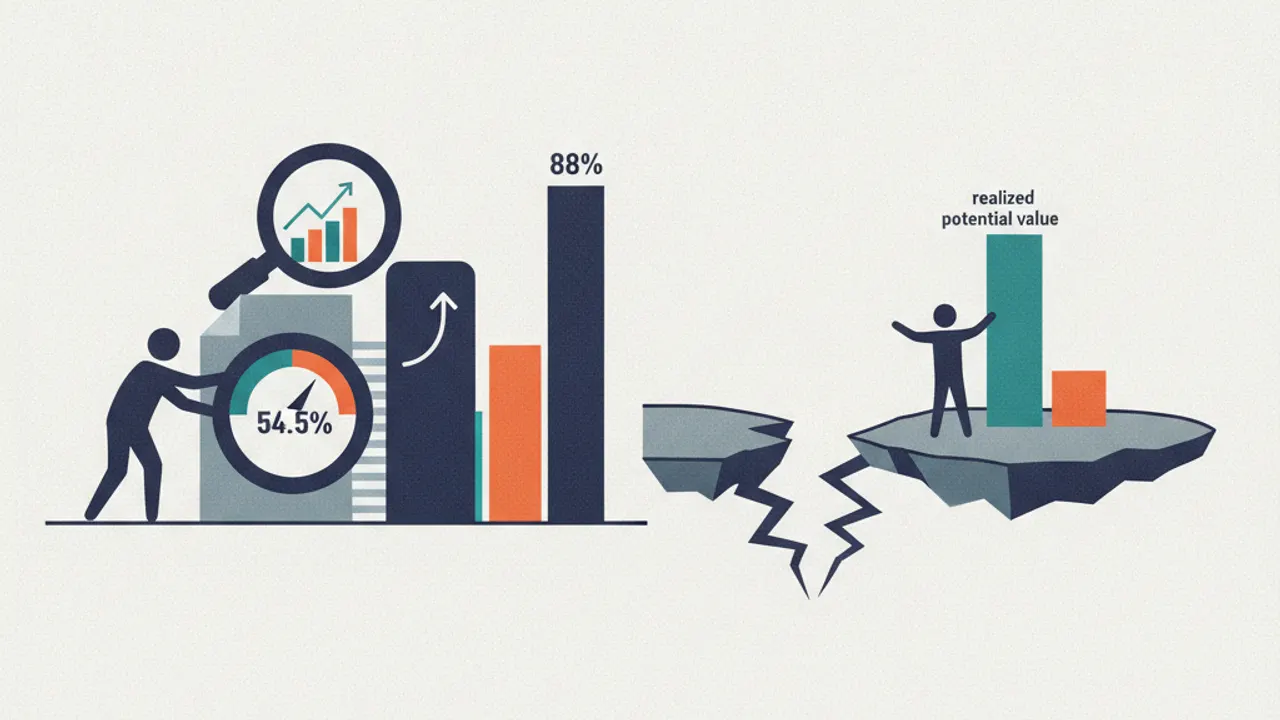
(KI-generiertes Symbolbild: Gemini / AI Connect)

The widespread advance of artificial intelligence is capturing both Germany's industrial core and the global economy with strong momentum. As a survey by the ifo Institute reveals, the share of German companies utilizing AI technologies rose significantly in May to 54.5 percent. In the corresponding period of the previous year, this metric stood at a considerably lower 40.9 percent. Usage is particularly pronounced across manufacturing and the service sector, where the adoption rate leads the evaluation at 58.7 percent.

This development aligns seamlessly with a broader worldwide picture of accelerated technology transfer. The latest AI Index Report from Stanford University's Institute for Human-Centered AI emphasizes the global scale of this transformation. According to the report, 88 percent of all organizations worldwide now deploy AI applications in at least one internal business function. Consequently, tools designed for automated data processing and pattern recognition have permanently left their status as niche applications behind.

Despite widespread adoption, a closer examination of corporate value creation reveals striking disparities among active users. The Global AI Maturity Report by Boston Consulting Group highlights that merely using tools does not automatically equate to a transformation of the underlying business model. Only 5 percent of all studied companies worldwide are categorized as true AI frontrunners and deemed reinvention-ready by BCG. However, these highly mature organizations achieve double the revenue growth compared to the overall market average.

The widening gap between casual adopters and deeply integrated pioneer companies underscores the strategic hurdles facing modern digitization initiatives. Many businesses currently confine themselves to sporadically accelerating existing routines rather than fundamentally redesigning core processes. The compiled data indicates that measurable financial advantages accrue primarily to actors that embed AI deeply into their strategic value chain.

Together, the findings from ifo, Stanford, and BCG portray an increasingly bifurcated corporate landscape. While broad application grows at record speed, outsized financial returns remain concentrated within a very small cohort of digital pioneers. The primary challenge for coming years will therefore consist in bridging this value gap through targeted process adjustments.

What this means for you

Executive leaders must realize that merely deploying AI software does not guarantee a sustainable competitive edge. To match the revenue growth of industry frontrunners, core business processes must be systematically restructured around AI capabilities.

Perspectives

Coverage: 2× EU · 1× US

One story, several angles: how each source frames the topic, each with a verbatim quote.

Leaning: 1× Lean left · 1× Academia

  • zeit.deLean leftEU

    The source highlights the results of the ifo survey, emphasizing that artificial intelligence has definitively reached broad adoption across the German economy with over half of companies using it.

    Original quote

    Künstliche Intelligenz ist in der deutschen Wirtschaft endgültig in der Breite angekommen

    zeit.de
  • hai.stanford.eduAcademiaUS

    The source focuses on Stanford University's global AI Index, emphasizing that AI capabilities are accelerating and organizational adoption is expanding.

    Original quote

    AI capability is not plateauing. It is accelerating and reaching more people than ever.

    hai.stanford.edu
  • digitaleneuordnung.deEU

    The source summarizes several AI studies and emphasizes the value gap, noting that despite high activity, measurable business impact often remains lacking.

    Original quote

    Es klafft noch eine große Lücke zwischen dem Einsatz von KI und nachweisbarer Wirkung (Ebit, Umsatz).

    digitaleneuordnung.de

Source classification is maintained editorially (political spectrum only where consensus is broad; vendor communication is PR, not journalism). Unlabelled sources are unclassified: we do not guess.

Evidence

Solidly sourced
62/100
  • According to the ifo Institute, German corporate AI usage rose to 54.5 percent in May, led by manufacturing and services at 58.7 percent.

    single source
  • Stanford University reports that 88 percent of organizations globally utilize AI in at least one operational function.

    single source
  • Boston Consulting Group finds that only 5 percent of global enterprises qualify as true frontrunners, yet they deliver double the revenue growth.

    single source

The evidence score is computed, not hand-set: from confidence, the number of sources and the share of verified statements.

Source & transparency

As of: August 03, 2026

AI-assistedAI-assisted, editorially reviewed

Sources
3
Verified statements
0 / 3
Evidence score
62Solidly sourced

Want to put this into practice?

We connect you with suitable AI providers from the DACH region, free of charge and without obligation.

What's next?