
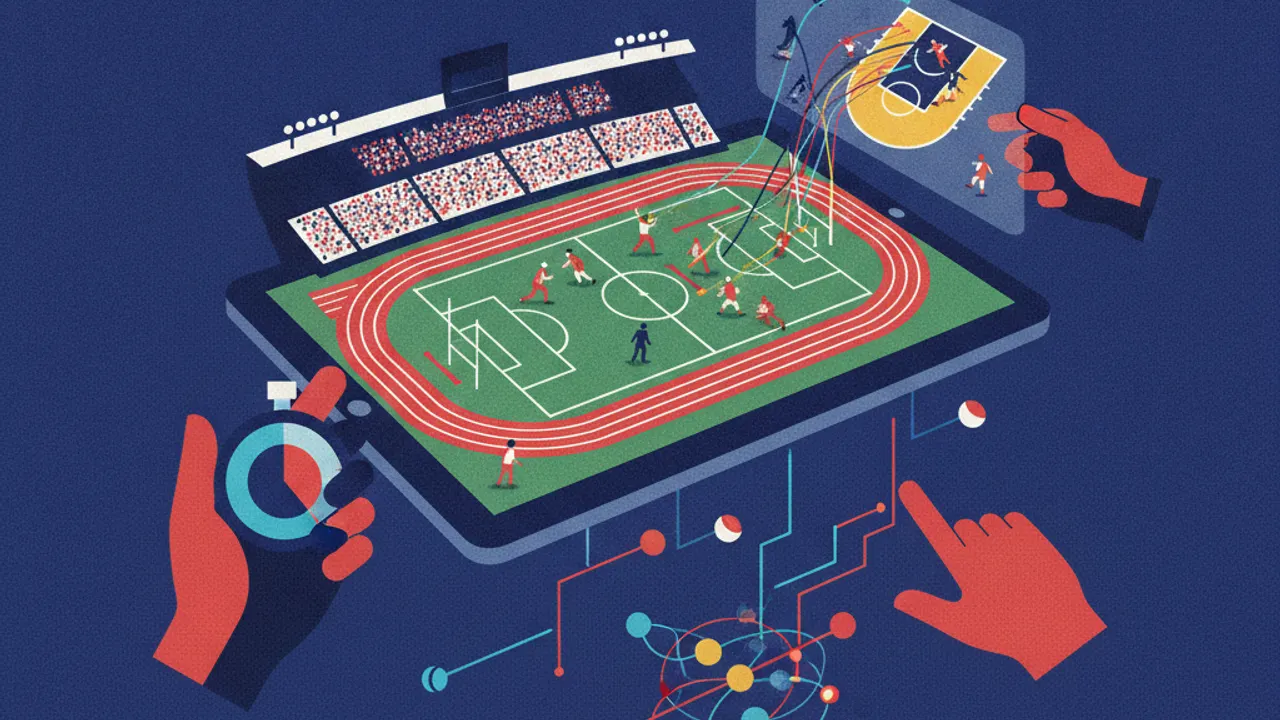
Tactical preparation in professional sports relied for decades on manual video reviews and human intuition. Today, advanced Geometric Deep Learning and complex language model architectures are decoding tactical patterns automatically. Coaching staffs now receive data-driven recommendations on their field tablets during live play.
Google DeepMind pioneered this field through a partnership with Liverpool FC to develop TacticAI. The platform utilizes Geometric Deep Learning to evaluate opponent positioning during set pieces, particularly corner kicks. In a research study published in Nature Communications, football experts preferred TacticAI's tactical setup suggestions over real human strategies in 90 percent of evaluated cases.
The technology has expanded beyond set pieces into dynamic match situations. Brazilian club Palmeiras became the first professional team to implement TacticAI during open play. Using drag-and-drop tablet interfaces, coaches can simulate structural game adjustments in real time, such as predicting outcomes when a fullback positions five meters higher up the pitch.
In the NBA, teams are applying advanced artificial intelligence methods using vector embeddings known as NBA2Vec. Functioning similarly to large language models, the system translates play patterns into sentences and individual player actions into words. This structure enables algorithms to calculate defensive shifts, free-throw probability, and optimal shooting spots in milliseconds.
Beyond tactical analysis, predictive biometric modeling is transforming injury prevention. Platforms such as Zone7, Catapult, and Kitman Labs combine wearable sensor metrics including heart rate variability, acceleration, and muscle fatigue with kinematic data from stadium cameras. The AI detects early signs of strain and recommends tailored workload adjustments for daily training.
This predictive infrastructure is complemented by generative AI tools integrated into athlete coaching. Solutions like the WHOOP Coach, powered by OpenAI models, enable athletes and physiotherapists to query live data regarding sleep, recovery, and training stimuli through natural language conversations.