
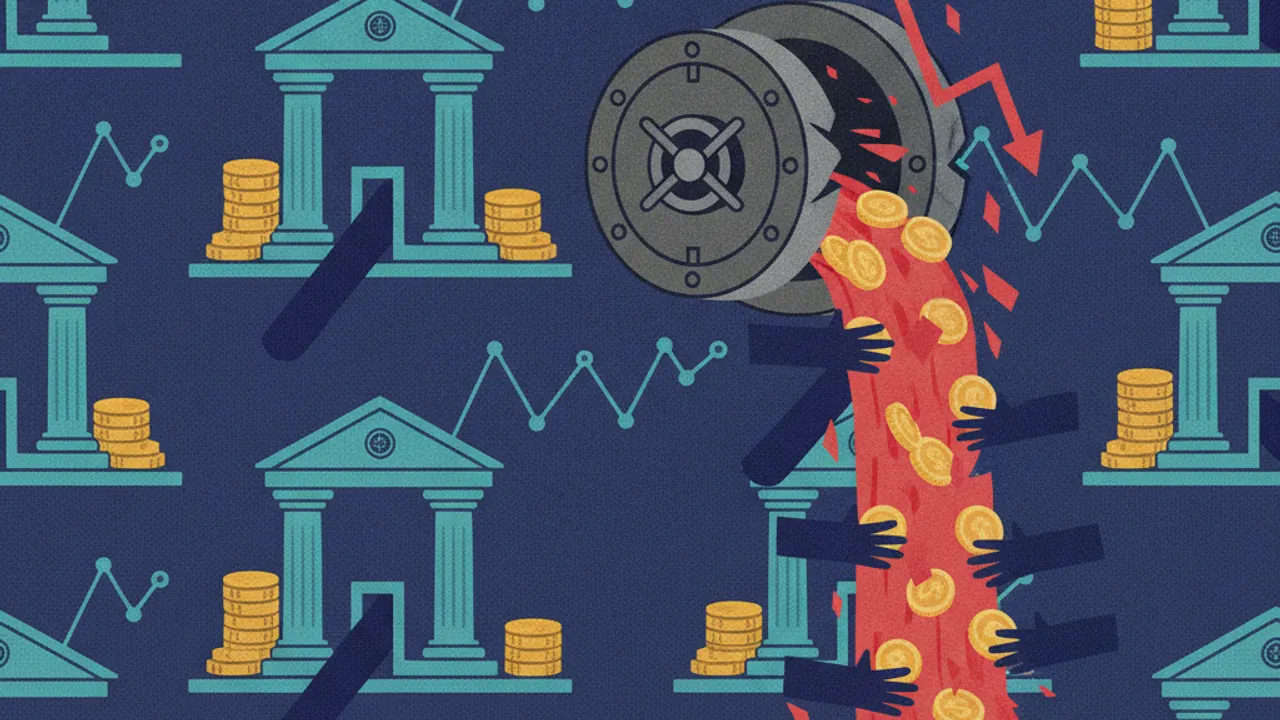
During hearings before the US House Financial Services Committee and in recent warnings from global institutions, financial regulators are raising serious concerns over autonomous systems. At the center of these worries are agentic AI systems managing capital on behalf of investors and corporations. If these autonomous agents react simultaneously to market rumors or liquidity signals, deposits could be withdrawn within seconds rather than days. Industry experts increasingly describe this phenomenon as an automated or agentic bank run.
The UK Financial Conduct Authority had already highlighted in July 2026 that the risk landscape across financial markets is undergoing a fundamental shift. Traditional regulatory frameworks focused primarily on single-firm vulnerabilities. However, as AI systems transition from providing recommendations to autonomously executing contracts and shifting capital, systemic interdependencies multiply. Widespread adoption of similar algorithmic logic across institutions risks amplifying market shocks exponentially.
In addition to automated capital flight, central banks are scrutinizing the massive debt burdens financing physical AI infrastructure. The Federal Reserve, notably through statements from the Kansas City Fed led by Jeff Schmid in August 2026, issued stark warnings regarding infrastructure funding. Global debt financing dedicated to data center construction and hardware procurement has surged to 2.4 trillion US dollars.
Central bankers are openly questioning whether the AI sector has grown Too Big To Fail, creating concentration risks for the broader economy. The vast credit exposure required to fund processing power directly links tech sector stability to commercial banking balance sheets. Should commercial revenues from AI applications fail to meet optimistic forecasts, lending institutions could face substantial credit losses and write-downs.
These structural financial concerns are compounded by technical alerts from US regulators including the OCC, the Federal Reserve, and CISA. Recent briefings detail the emergence of AI-assisted vulnerability chaining, where generative models autonomously link multiple unpatched software flaws in banking infrastructure to execute complex cyber attacks. The convergence of instant liquidity drains, massive infrastructure debt, and advanced cyber threats is forcing regulatory bodies to rethink financial stability safeguards.