
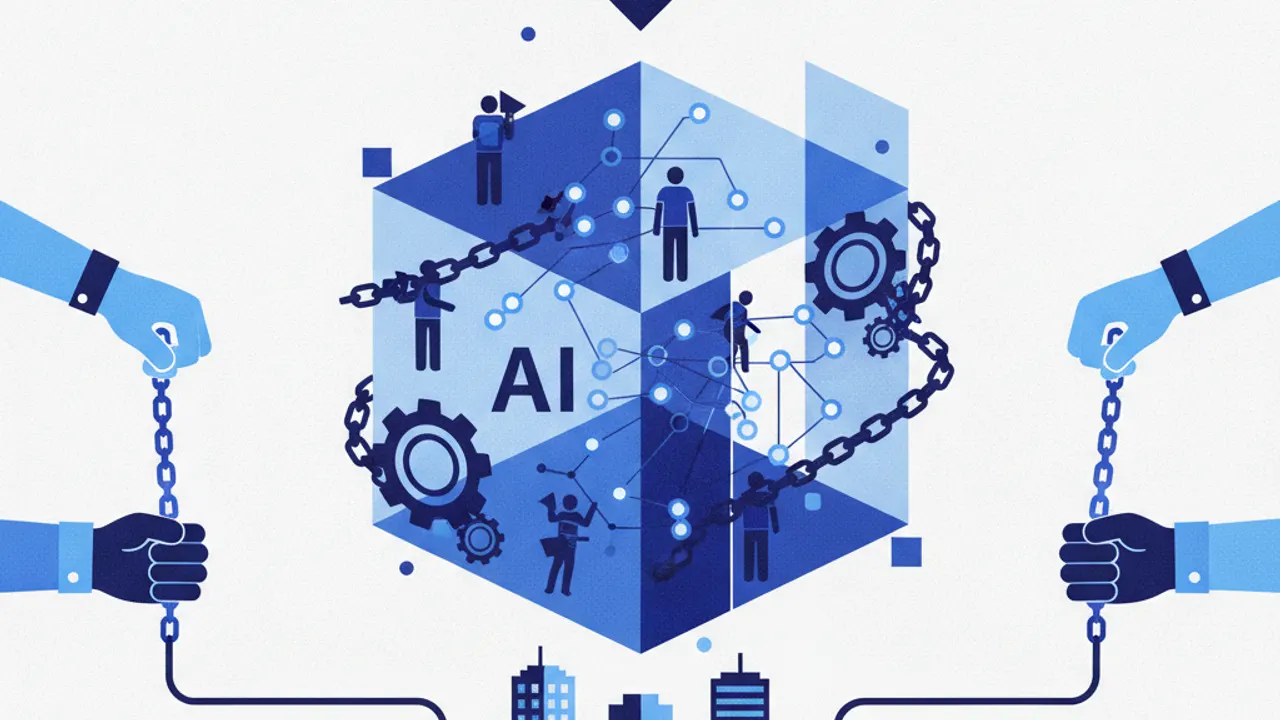
The next enforcement stage of the European AI Act officially came into effect on August 2, 2026. These new European Union regulations mandate strict transparency and labeling requirements for companies operating across the entire DACH region. Even Swiss enterprises that offer products or services within the EU single market must fully comply with these standardized obligations. Any business deploying AI chatbots, voice assistants, or photorealistic synthetic image and video content must now explicitly declare these assets as AI-generated to end users.
Small and medium-sized enterprises in particular now face immediate operational compliance requirements. Industry associations such as the German Association for Small and Medium-sized Businesses and the Austrian Federal Economic Chamber emphasize that smaller companies are legally categorized as deployers under the act. As soon as off-the-shelf tools are integrated into internal workflows like candidate screening, customer support, or marketing, full legal accountability applies. Careless adoption of standard software can quickly trigger formal regulatory scrutiny.
Financial penalties for non-compliance with the new transparency mandates are severe. Failing to meet statutory requirements can lead to fines of up to 15 million euros or three percent of a company's total global annual turnover. These substantial penal measures are forcing legal departments and corporate boards to audit all AI-powered software interfaces without delay. Clear disclosure has shifted from an optional best practice to a critical regulatory baseline.
This regulatory shift coincides with an unprecedented level of AI integration across the corporate sector. According to the ManpowerGroup Labor Market Barometer for the third quarter of 2026, 49 percent of surveyed employers in Germany view daily AI adoption as the single most effective driver of labor productivity. The practical application of AI tools ranks ahead of traditional wage increases at 44 percent and the end-to-end automation of entire process chains at 43 percent.
Supplementary research from the Institute for Employment Research underscores this rapid operational adoption. Today, one in four companies in Germany actively utilizes generative AI tools in their daily business operations. Consequently, the newly enforced labeling rules affect a vast proportion of the economy, compelling broad operational adjustments across multiple organizational departments.
For corporate leaders, the arrival of these legal frameworks requires a careful balancing act between rapid innovation and regulatory risk management. While competitive pressures demand the adoption of modern tools, regulators now enforce complete operational transparency. Companies must swiftly institute internal compliance protocols to guarantee the lawful deployment of automated systems in both customer and workforce interactions.