
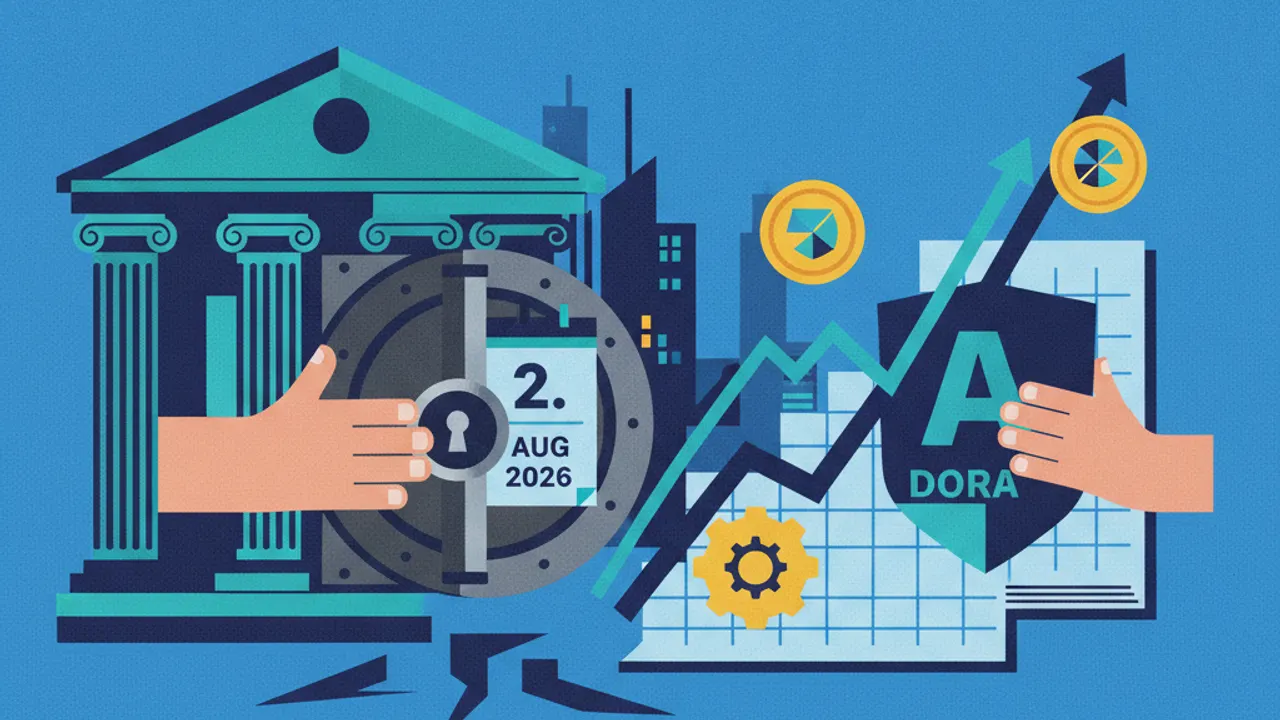
August 2, 2026, marks a decisive deadline for the regulatory framework governing the European financial sector. Exactly two years after the initial entry into force of the EU AI Act, all AI systems classified as high-risk must achieve full legal compliance. Banks and FinTech companies face the operational mandate to align technological innovation with strict supervisory requirements. In 2026, compliance teams must simultaneously satisfy the mandates of the EU AI Act, DORA, MaRisk, and GDPR.
High-risk classifications under the regulation directly encompass essential core functions in retail and commercial banking. Software systems determining creditworthiness or generating credit scoring metrics fall explicitly under this strict governance tier. The category similarly applies to AI tools that calculate insurance premiums, manage anti-money laundering controls, or evaluate consumer access to financial services.
To ensure compliance, financial institutions must implement robust technical and operational documentation. Regulatory authorities explicitly demand explainability in AI decision-making, requiring methodologies such as SHAP or LIME to unpack model outputs. Furthermore, institutions must maintain detailed system logging and ensure meaningful human control through established human-in-the-loop workflows.
Non-compliance with the regulatory provisions carries severe financial penalties for market participants. The enforcement framework of the EU AI Act permits fines reaching up to 30 million euros or up to 6 percent of global annual turnover. These punitive measures force executive boards to treat regulatory alignment as a top corporate oversight priority.
Simultaneously, the Digital Operational Resilience Act requires proof of operational resilience across all digital financial services. European supervisory bodies including BaFin and the EBA are intensifying audits of AI software infrastructure in 2026. Regulators are placing primary focus on cybersecurity controls and critical dependencies on third-party Big Tech cloud infrastructure providers.