
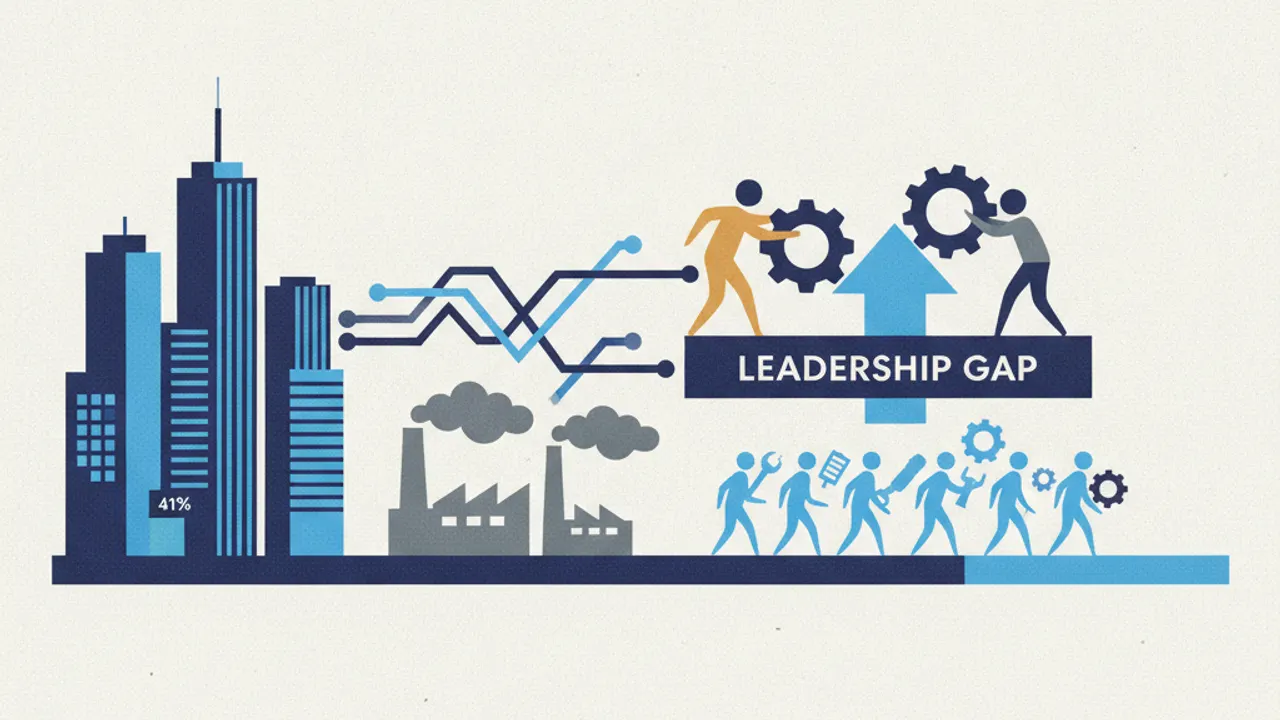
The adoption of artificial intelligence in the German economy is shifting rapidly from pure experimentation toward deep operational integration. According to a Bitkom study published in March 2026, 41 percent of all German companies with 20 or more employees actively use AI in their core business. Just one year prior, that figure stood at a mere 17 percent. An additional 48 percent of surveyed businesses are currently in concrete planning or discussion phases regarding deployment. This demonstrates how deeply AI technologies have penetrated daily corporate operations across the region.
Despite widespread adoption, internal governance and leadership oversight still lag behind technical implementation. As revealed by the KPMG study 'Generative AI in the German Economy 2026', between 97 and 98 percent of companies view AI as essential to their future business models. While 98 percent now possess a dedicated AI strategy, up from 31 percent in 2024, this strategy is actively managed by top executive management in only 39 percent of cases. The primary bottleneck has consequently shifted from software availability to governance, data architecture, and change management.
Developments in the labor market reflect a unique structural approach to artificial intelligence skills in Germany. The PwC AI Jobs Barometer 2026 highlights that the share of AI-related job postings in Germany reached a record high of 1.3 percent, representing roughly 125,000 openings. However, the data reveals a German anomaly, where the correlation between AI exposure and structural changes to job profiles sits at an extremely low 0.02. German companies are primarily integrating AI skills into existing positions as added requirements rather than creating entirely new specialized roles.
Significant structural shifts are nevertheless appearing at the entry level of corporate career ladders. An ifo survey cited in a parliamentary inquiry from August 2026 revealed that 14 percent of companies already use AI for typical junior and entry-level tasks. Furthermore, 40 percent of surveyed enterprises plan to introduce AI for these entry-level duties within the next three years. This shift has ignited a broader discussion on how junior staff will acquire foundational professional skills when traditional routine tasks are increasingly automated.
Regarding measurable economic returns, German companies report largely positive outcomes from their artificial intelligence initiatives. According to Bitkom data, 77 percent of surveyed enterprises state that AI deployment has enhanced their competitive market position. Furthermore, 52 percent report measurable contributions to overall corporate profitability and operational success. Analysts from the German Economic Institute and IAB also emphasize that AI serves as a crucial compensatory mechanism against the pressures of a shrinking labor pool due to demographic shifts.