
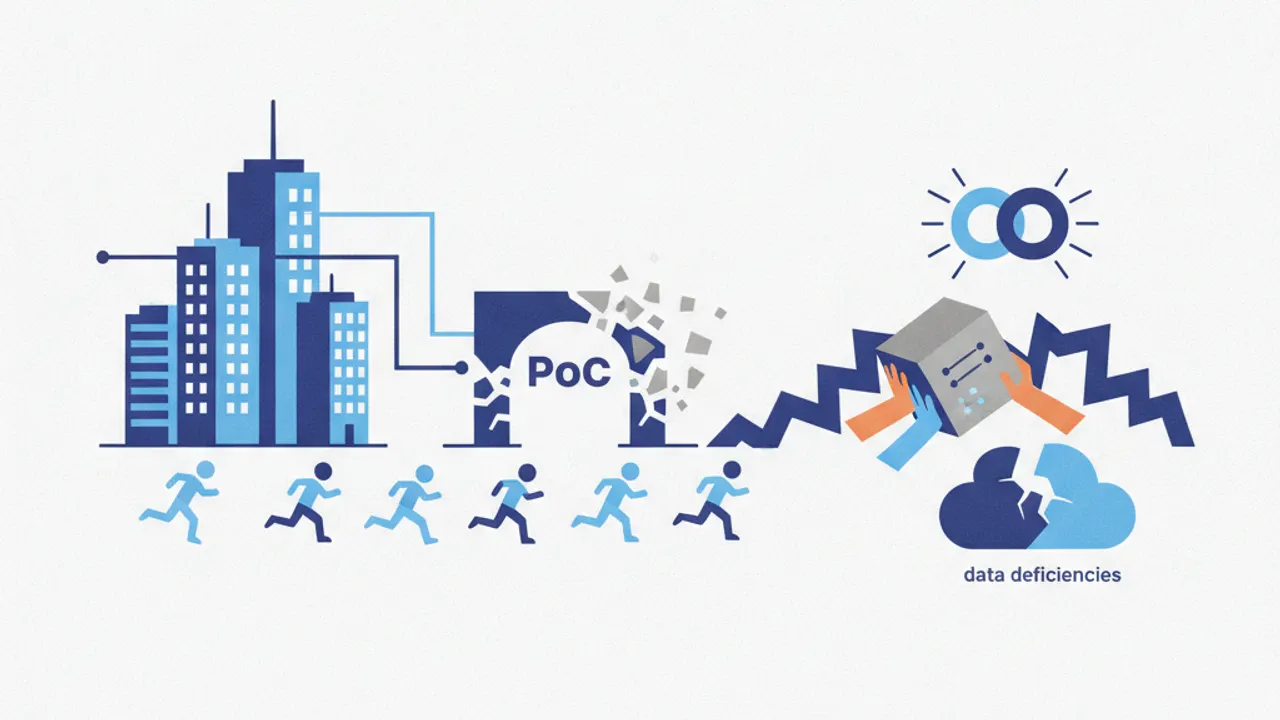
Enthusiasm for artificial intelligence in the DACH region's business sector is turning into clear disillusionment in 2026. According to a recent Bitkom study, 41 percent of German companies with 20 or more employees actively use AI technologies today, representing more than a doubling from 17 percent in the previous year. However, implementations rarely proceed according to plan. Many organizations are discovering that actual expenses significantly exceed initial budgets.
This trend hits small and medium-sized enterprises particularly hard, with roughly 33 percent reporting substantial cost overruns. Inadequate data infrastructures and unmanaged growth of unstructured data are considered the primary drivers of these financial traps. Currently, only about 60 percent of corporate data is considered technically ready for direct deployment in modern AI systems. Without extensive data cleaning, anticipated efficiency gains fail to materialize.
Consequently, many companies are executing a strategic pivot away from isolated pilot projects. The phase of uncoordinated experimentation, often dubbed proof-of-concept isolation, is giving way to systematic integration into existing IT architectures. Rather than running standalone solutions, companies are now connecting AI capabilities directly to established ERP and CRM platforms. This shift helps fulfill data privacy and governance mandates under the EU AI Act while resolving scaling friction.
On a macroeconomic level, these adjustments are reflected in shifting business expectations. The KfW-ifo Small Business Barometer recently recorded a 4-point rise in its business expectations index to minus 17.3 points. To bridge the massive venture capital investment gap compared to the United States, KfW is expanding equity financing for deep-tech and AI startups under the European InvestAI initiative. These funds aim to strengthen the regional ecosystem for high-tech ventures.
The development illustrates that pure optimism is no longer sufficient to make AI projects economically viable. The strategic focus is shifting decisively toward strict cost control, data readiness, and regulatory compliance. Organizations that fail to clean their core data assets risk entering expensive long-term dead ends. For the business landscape in 2026, real return on investment demands solid technical foundation work.