
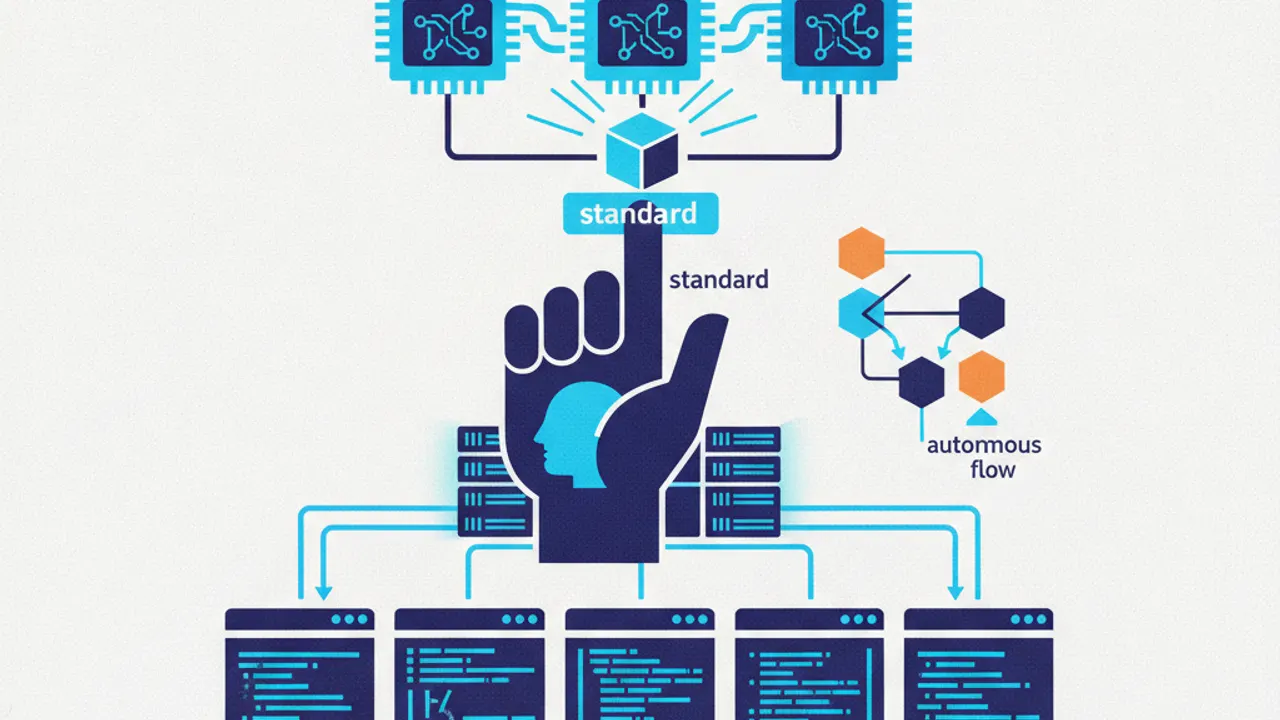
AI developer Anthropic is fundamentally restructuring the permission logic in its Claude Code environment. Beginning August 14, 2026, the autonomous Auto Mode will become the default setting for all Pro, Max, and Team subscribers. This measure shifts safety oversight from manual approvals by human programmers to automated protective systems. The decision follows internal findings regarding the severe decline of human attention during repetitive prompt confirmation requests.
To justify this strategic shift, Anthropic published internal evaluation data involving 1,053 test participants. The empirical results demonstrate that human developers suffer from acute fatigue caused by constant confirmation popups. During testing, human participants correctly identified only 13.6 percent of dangerous system commands. As testing sessions progressed, the detection rate among humans plummeted to approximately 5 percent after 50 prompts.
In direct contrast to human performance, Anthropic's automated classification system performed significantly better. The integrated AI classifier successfully identified and blocked 89 percent of harmful actions in real time. Based on these findings, the company concluded that algorithmic safeguards offer far more reliable protection against unauthorized system modifications than exhausted human operators clicking through approval dialogs.
With Auto Mode active by default, the functional role of software developers working alongside AI agents undergoes a major transition. Instead of manually signing off on every individual terminal command, engineers focus on supervising broader execution workflows. Developers configure explicit operational boundaries and guidelines prior to execution. The assistant then carries out necessary coding tasks autonomously unless critical safety thresholds are triggered.
This deployment highlights a broader industry transformation toward agentic autonomy in software engineering. As code generation assistants become faster and more integrated, traditional human in the loop mechanisms hit obvious cognitive limits. Anthropic's empirical study illustrates that automated safety filters must act as the primary defense line, leaving humans to focus on higher level architectural supervision.